
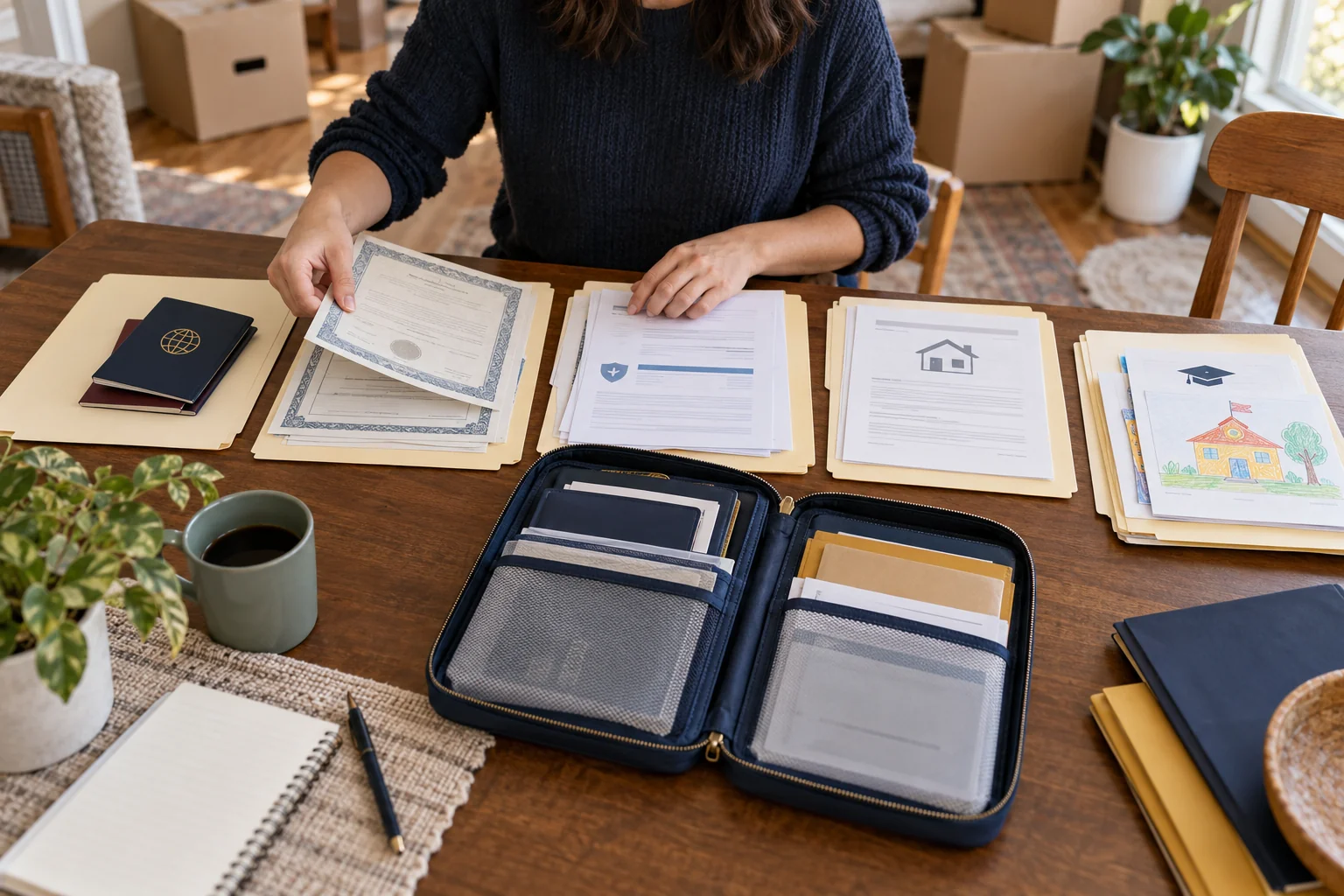
Important papers are easy to misplace during a move because they look like ordinary paper until you need one. A lease may be required to collect keys, an identification card may be needed for travel, and a medical record may matter before the last carton is unpacked. Keeping these records in a clearly assigned carry-on kit gives the household access to them during the transition. It also keeps sensitive information out of a box that could be left in a truck, garage, or storage unit.
The first rule is ownership. Choose one adult to maintain the document kit and decide who can access it. If that person will not be present throughout the move, name a backup and explain the handoff. The kit should travel with the household rather than in the moving shipment. A code on a carton is helpful for normal belongings, but it cannot provide the same control over passports, financial papers, or current prescriptions. Use the room-code and label system for ordinary boxes and a separate record for documents.
Make an inventory of categories, not a public list of private numbers. Record that the kit contains household identification, housing documents, health records, financial records, school or work records, pet papers, and moving agreements as applicable. Note where originals are kept and whether a copy exists. Do not put Social Security numbers, account numbers, or passwords into a shared moving checklist. The objective is to know what has been gathered without creating another exposed source of sensitive data.
Decide what must be accessible during the move
Start with records that may be requested before the household is settled. These can include driver's licenses and other identification, passports if travel requires them, the current and new lease or closing documents, insurance cards, vehicle registration, moving contract, booking confirmation, and payment records. Add keys, entry codes, and building contacts to the travel plan, though they may be kept on a key ring or secure phone rather than in the paper case.
Consider health needs for every person traveling. Keep current medication information, prescription details, insurance cards, and provider contacts accessible according to the household's needs. If a family member relies on medical equipment, keep instructions and essential contacts with that equipment or in a readily available file. Protect privacy: a helper unloading furniture does not need access to health records. The person responsible for care should know where the relevant information is.
Children and pets may require records soon after arrival. A school may request enrollment or immunization information; a veterinarian or boarding facility may ask for pet records. Check the receiving institution's requirements rather than carrying every historical file. If an original must be presented, keep it in the document kit. If a secure digital copy is accepted, make sure it can be opened without depending on a device that will be packed or a login whose recovery method is unavailable.
Some papers are valuable because replacing them is difficult or slow, even if they are not needed during travel. Birth and marriage certificates, property records, legal papers, and irreplaceable family documents deserve a deliberate plan. A household may choose a secure off-site location for some originals or carry them personally. The choice depends on access, safety, and the move route. Do not place them in a carton simply because they will not be used on moving day.
For the moving transaction itself, keep the current estimate, order or booking confirmation, inventory, bill of lading when issued, and contact information together. FMCSA's interstate moving checklist advises consumers to read the completed documents before signing and to keep the bill of lading until delivery, charges, and any claims are settled. Local moves may involve different documents and rules. Either way, the household should be able to find the current agreement without searching through boxes or hundreds of messages.
Gather originals and copies deliberately
Walk through the places records accumulate: desk drawers, filing cabinets, safe, kitchen message area, glove compartment, and digital folders. Give each category one temporary gathering place while sorting. Verify that an envelope actually contains the paper its label claims. Old copies and expired cards can remain in files for years. Do not discard a document merely because you think it has been replaced; check whether it is needed for a pending transaction or recordkeeping requirement.
Separate originals from reference copies. Use plain folders or sleeves, then put them into a portable case that closes securely. A small water-resistant pouch may help protect paper from rain or spills. Ready.gov recommends keeping important documents in a waterproof container and creating password-protected digital copies for emergency preparation. A move is a different event, but the same protection can help when a document kit passes through a vehicle and temporary lodging. Choose a container you can actually carry and monitor.
Make digital copies only where useful and permitted. Scan or photograph both sides when information appears on both. Check that the image is readable before putting an original away. Name files by document type and person without exposing sensitive numbers in the filename. Store them in a secure account or encrypted location with access available to the responsible adults. Do not leave them in a public shared folder or send them broadly by email. A digital copy may help you refer to information, but it may not substitute for an original where a business or government office requires one.
Plan for loss of connectivity. If the household needs a document at a building desk or during travel, make sure an authorized person can open it offline or has the paper version. Test the device, application, and login before moving day. A password manager or multifactor authentication method should remain accessible. Do not pack the only device that can receive a verification code or the only charger required to use it.
There may be records you should not carry in an overstuffed tote. If the household has large archives or files that are not needed soon, decide whether secure storage, a locked file box in the shipment, or another arrangement is appropriate. The carry-on kit should contain current and hard-to-replace essentials, not every page produced over a decade. Keep a separate inventory of any document boxes going with the shipment and ask the mover about its terms if sensitive papers are involved.
Make the kit easy to find and hard to confuse
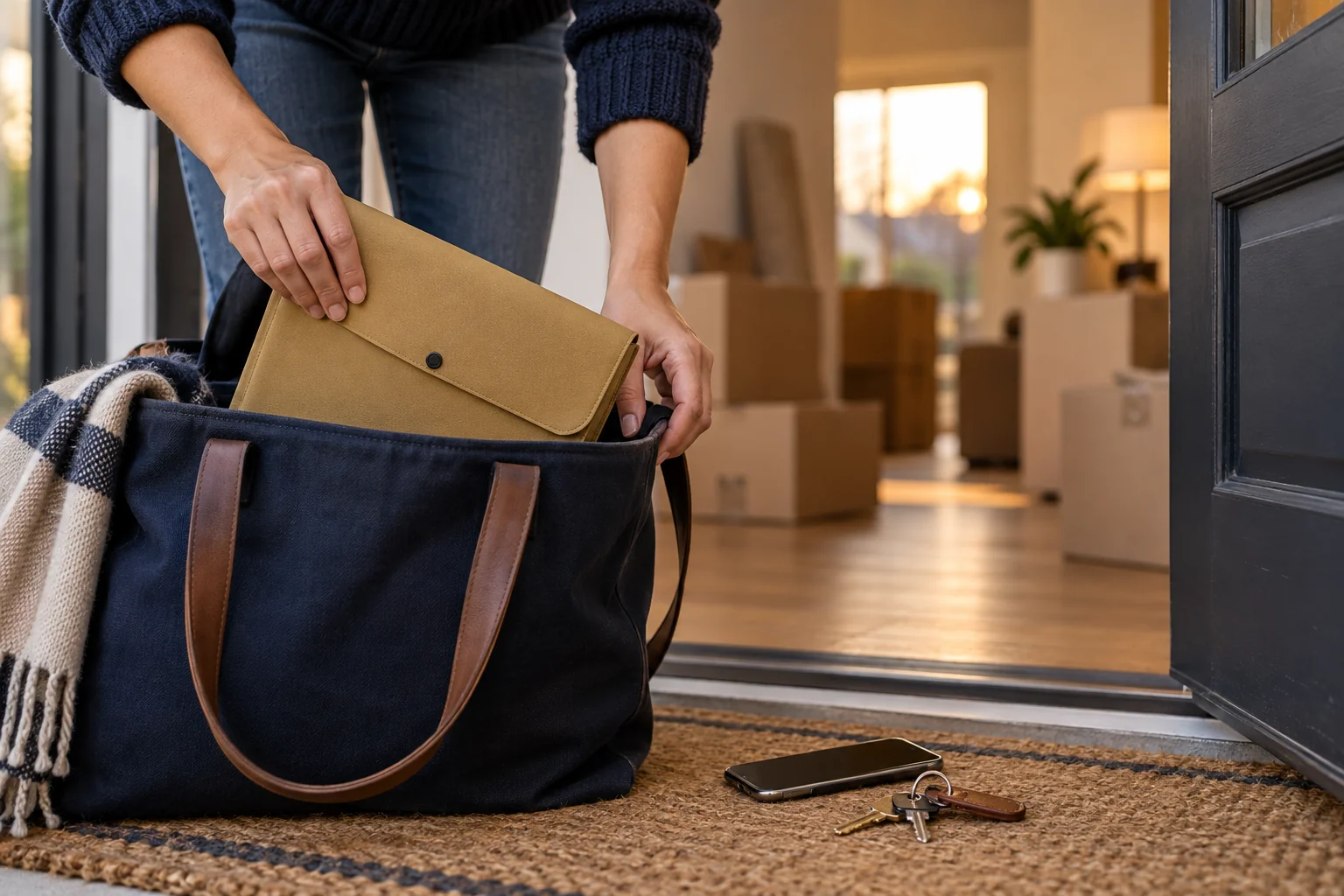
Choose a case that is different from ordinary moving cartons and does not advertise sensitive contents. A closed document pouch inside a personal bag works better than a brightly marked box labeled “financial records.” Keep the case in one designated travel location when the household is packing, then move it to the vehicle or bag under the owner's direct control. Tell household members that it must not be loaded with furniture. Do not leave it on the same table as cartons awaiting the crew.
Use a short internal checklist for the kit. It might say: identification for each traveler, current housing agreement, moving agreement and contacts, health information needed soon, vehicle papers, children or pet records needed at arrival, and hard-to-replace originals. Check categories off after placing them in the case. Count the folders before leaving the old home and again at the destination. This is a custody check, not a public log of every document's details.
If two adults travel separately, decide which records each will carry. The person collecting keys may need the housing agreement and ID; the person accompanying a child may need health or school information. Splitting documents can reduce risk but can also create confusion. Write down the assignment in a private note and confirm that each person understands it. Keep a backup way to reach the other person if one vehicle is delayed.
Set a rule for temporary removal. If someone takes a passport out of the kit for a form, return it immediately or record where it is. Do not leave a vital document on a printer, hotel desk, or dashboard. A small routine prevents the common “I saw it yesterday” search. The same rule applies to the moving agreement when it is shown to a crew: keep the original in the case and provide a copy when possible.
Keep the case protected from weather, spills, and heat. A waterproof sleeve protects against a brief spill, but it is not a reason to leave papers in a parked car or exposed loading area. Do not place the case where it could be mistaken for a donation bag or cleaning-supply tote. At a stop during travel, carry it with you if the vehicle will be unattended and that is the safer practical choice.
Plan a response if the case cannot be found. The private category checklist should tell the owner what may be missing without exposing account details to helpers. Search the last known handoff points first: vehicle, temporary lodging, old-home desk, and new-home entry. If identification, payment cards, or other sensitive items are actually lost, contact the relevant issuing organizations promptly through verified channels and follow their replacement or security instructions. A digital backup may help identify what was in the kit, but it does not make loss of an original harmless. Avoid telling the entire moving crew where sensitive papers were stored unless a specific search requires it.
Records involving another person need extra care. A caregiver may need access to a dependent's medical instructions, while legal authority to sign or request records may rest with a particular adult. Decide in advance who will carry those papers and who is authorized to use them. If a child travels separately from the household lead, give the accompanying adult the information needed for that trip and keep the rest controlled. Do not assume that every family member needs a copy of every private file.
For a household business or remote worker, separate records needed for work continuity from archived files. A client contract, tax document, or device recovery code may be difficult to replace and should not vanish into a general office carton. Follow any employer or professional rules for handling confidential material. If a work laptop or storage device contains sensitive data, secure it as instructed by the organization and keep access credentials out of the carton label. A moving plan should protect both the physical device and the information on it.
Connect records to moving decisions
The document kit should contain the latest version of the moving agreement. When the provider sends a revised estimate or date confirmation, replace the outdated working copy and keep the older version in the digital archive. Mark which one is current. A crew or dispatcher may ask about a service change, and the household needs to know what was actually confirmed. If a change is only verbal, request written confirmation before treating it as settled.
Keep receipts for deposits, equipment rentals, and building fees in the move record. They do not all need to be on paper in the carry-on case, but the responsible person should be able to retrieve them. At delivery, compare the bill and approved changes with the current record. FMCSA explains that interstate movers use several documents for different purposes; do not confuse a household packing list with the mover's shipment inventory or a credit-card receipt with the service agreement.
If a record is needed to claim keys, park a truck, use an elevator, or enter storage, put a copy in a quick-access section. The original can remain in the protected sleeve. Give a building representative only the information required for the transaction. A full folder of personal papers should not be handed over simply because one page is needed.
If the household will be between homes for several days, think about access during that interval. You may need identification, insurance information, receipts, and contact numbers while staying with family or in temporary lodging. Keep the kit close enough to use but under control. Do not ship it ahead of you or place it inside a storage unit that might be closed when an urgent question arises.
Work through a household example
Imagine two adults and a child moving across state lines. One adult will drive a rental car to the new home; the other will travel later with the child. Their mover will carry the household goods. The family needs the new lease to collect keys, health insurance cards and medication details during travel, the child's school records for enrollment, and the moving documents at pickup and delivery.
They make a category checklist and gather the current originals. The adult driving first carries the lease, identification, key-handoff instructions, and a copy of the moving agreement in a closed document case. The adult traveling with the child carries the child's needed health information and a secure copy of the school records. Both can access the provider's phone number and booking details. They do not send a photo of every sensitive document to a group chat used by helpers.
Before the movers arrive, the family places the document case in the personal vehicle, not beside the cartons in the hallway. At pickup, the lead adult reviews the mover's inventory and keeps the issued documents with the move file. If a revised delivery window arrives, the update goes into the digital record and the responsible adult notes which version is current. At the destination, the driver has the lease and ID to collect keys even if the moving truck is delayed.
After delivery, the adults compare the kit checklist with the folders they carry. The school records are still with the child, and the mover's documents are in the move file. The family can then put records into a secure location in the new home rather than leaving the portable case near an open front door. If a box or item is missing, the moving documents remain available for the provider's process.
Reestablish a safe home for the records
Choose a secure place for originals in the new home before the kit becomes part of general unpacking clutter. Put active documents where the responsible adults can find them and archives where they are protected. Update addresses with the organizations that need them using their official processes. Do not assume the move itself updates a bank, insurer, school, or government record.
Review digital copies after arrival. Remove duplicate scans from temporary devices or shared folders that were used for convenience, while retaining copies in the secure location you intended. Check that recovery options and contact information still work. A household that changes its phone number or internet service during the move can lock itself out of the account that stores its documents if it does not plan the transition.
The kit can remain open until the moving bill is reconciled, any claim is resolved, and the first round of address-dependent tasks is complete. Then file the papers into their long-term places. The first-night and first-week essentials plan can identify which records must remain accessible during the transition. The useful distinction is simple: ordinary possessions can follow the shipment plan; records needed to identify, pay, enter, care for, or document the household need a named custodian and a separate route.