
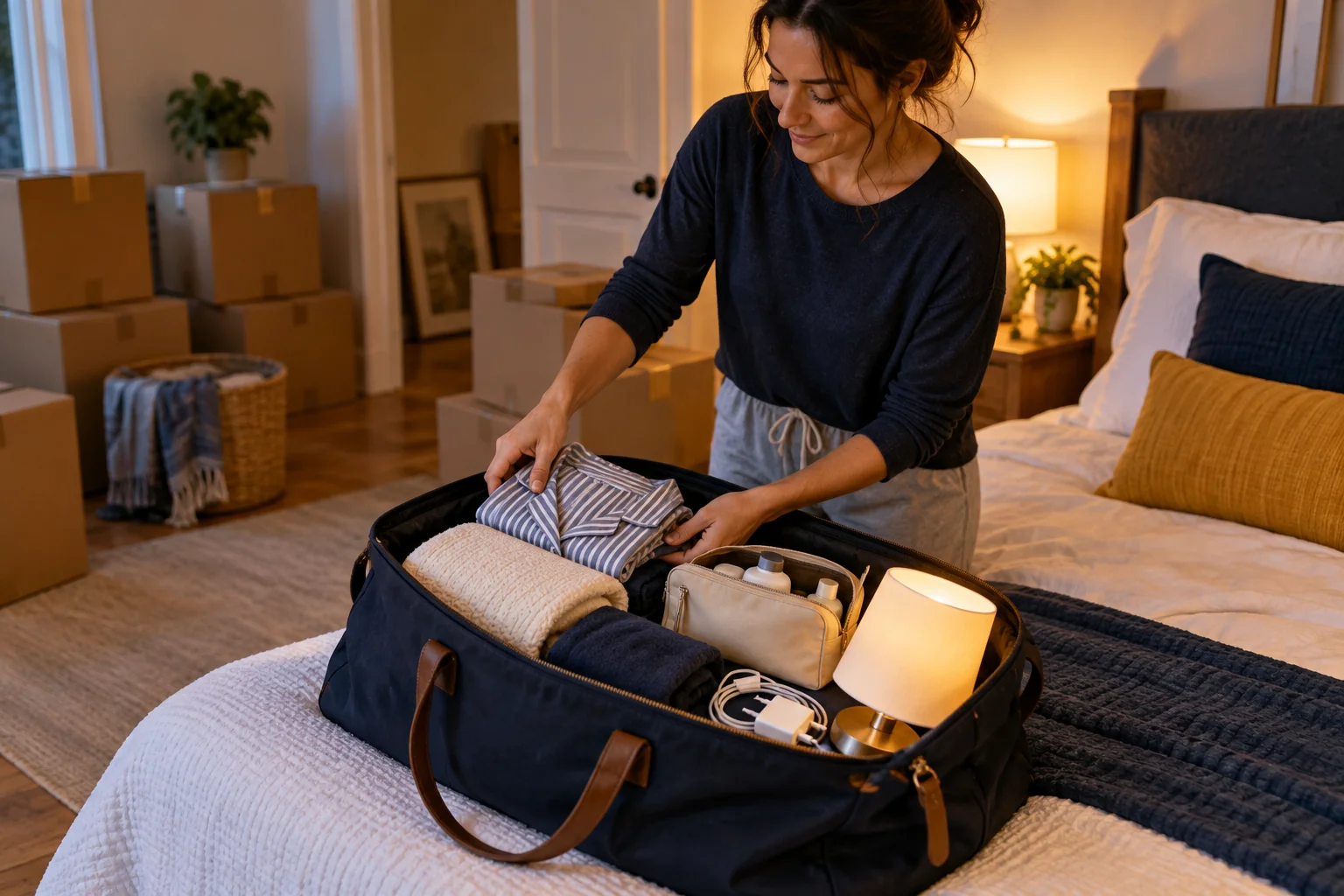
The first evening in a new home can be uncomfortable even when every carton arrives. A bed frame may be in one room while its hardware is in another. The towels may be behind thirty kitchen boxes. A phone may need charging before the family can find the charger. An essentials plan prevents the first hours from depending on a complete unpacking job. It identifies what must travel separately, what should be unloaded early, and who is responsible for each item.
Make two time horizons. First-night essentials are what the household needs to enter, sleep, wash, eat simply, and handle an immediate problem. First-week essentials support work, school, health, cooking, laundry, and basic cleaning before all rooms are organized. The exact contents depend on the people, pets, climate, destination, and travel schedule. Do not copy a generic list without checking what your household actually uses.
The kit should fit the route. If the moving truck may arrive after the household, carry the first-night items with you. If everything travels in one vehicle but unloading will take hours, keep those items in a clearly separate zone that cannot be buried. Important documents and identification need their own controlled plan; see the guide to packing and tracking important records separately. A toiletry bag is replaceable. A passport or current medical document deserves different custody.
Start with people, not boxes
List each person who will spend the first night at the new address. Note sleep needs, clothing, hygiene, medication and medical equipment, food, mobility needs, and anything that would be hard to obtain at a late hour. A child may need a familiar comfort item and sleep supplies. An older adult may need a device charger or accessible path to the bathroom. A person working the next morning may need a laptop, work clothes, and a reliable internet plan. Assign a bag or container to each person when that makes the handoff clear.
Keep prescribed medication, necessary medical supplies, and instructions accessible according to the person's care plan. Do not leave them in a hot vehicle or a moving carton where the owner cannot reach them. Check storage conditions and travel needs for specific items with the relevant pharmacist or clinician. A household member should know where the supplies are and who will carry them, without broadcasting private health information to helpers.
Plan for pets separately. Food, water, bowls, leash or carrier, waste supplies, medication, and a safe quiet place may be needed immediately. The pet's travel plan should be known before the door stays open for loading and unloading. A pet that must be kept away from the moving crew may spend the day with a trusted person or in a secure room; decide that ahead of time. Do not put pet supplies into an ordinary carton that will be inaccessible until the last room is unloaded.
Think through the actual arrival hour. A household reaching the new home at noon can buy dinner or unpack the kitchen before bed. A household arriving after a long drive at 10 p.m. may need ready-to-eat food, drinking water, bedding, a flashlight, and a way to find the bathroom. The essentials plan should match the latest plausible arrival, not the ideal schedule. If delivery could be several days later, the personal travel kit must cover that interval.
Make the first-night kit work without unpacking
Start with entry: keys, access codes, building contacts, parking instructions, and a way to reach the moving provider. Keep phones charged and bring the right charging cables or a power bank. If the destination is unfamiliar, save the address and directions for offline access. A printed contact note can help if a phone is lost or out of power. Do not assume that internet service will be active as soon as you arrive.
For sleep, plan mattresses or beds, sheets, pillows, blankets, and any tools or hardware needed for assembly. If the bed will be delivered on the truck, ask how it will be unloaded and set up. Keep its hardware in a labeled bag tied to the item plan, not loose in a carton. Have a fallback place to sleep if the truck is delayed or the frame cannot be assembled that night. A sleeping plan is more useful than a bag of linens with no available bed.
For washing, pack toilet paper, hand soap, towels, toothbrushes, toiletries, shower supplies, and a change of clothes for each person. Check whether the new home's water and power will be on. A small cleaning kit can make bathrooms and counters usable before normal household supplies are unpacked. Add a trash bag and a way to handle packaging. These are ordinary items that become surprisingly urgent when they are sealed in unmarked cartons.
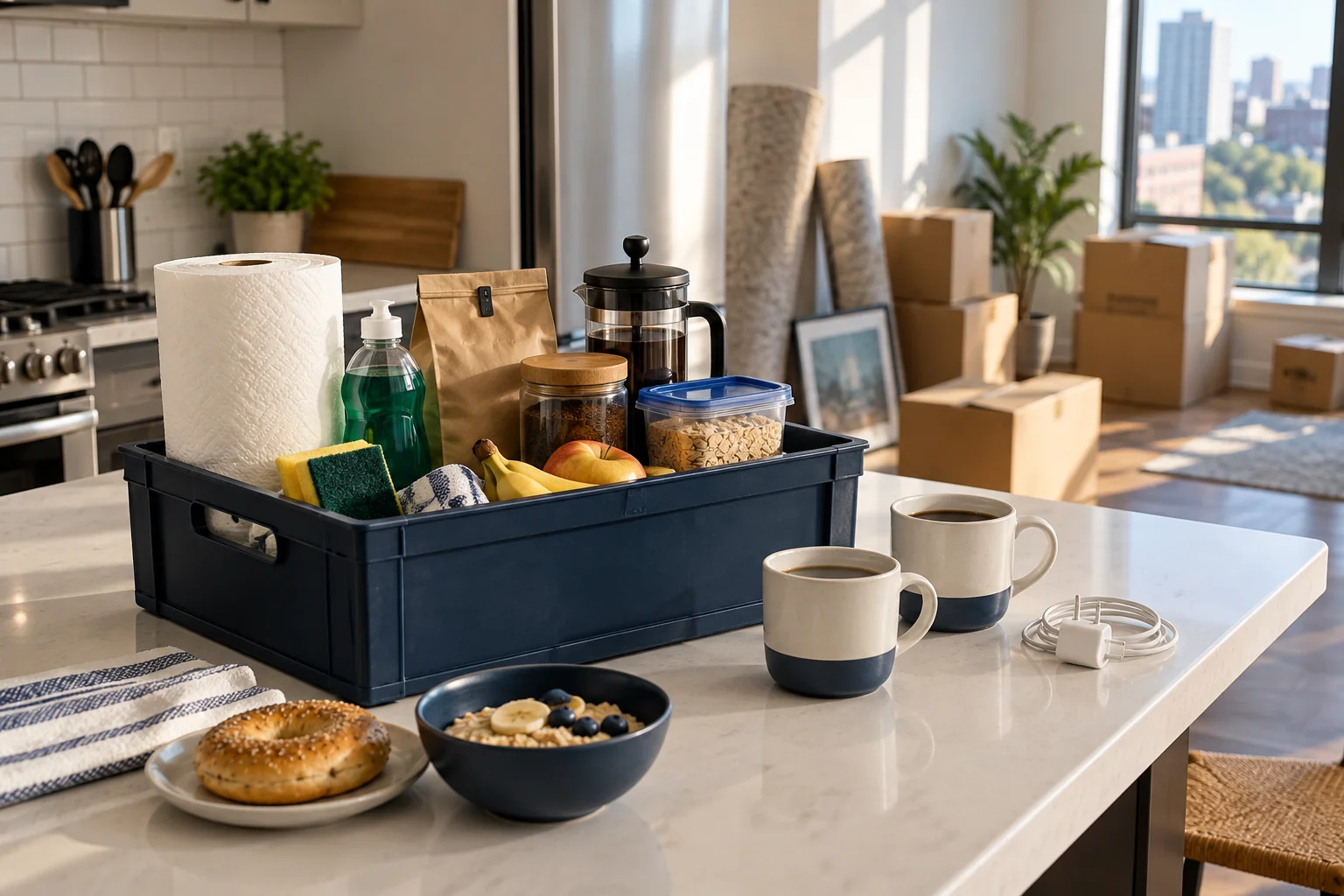
For food, choose an approach that fits the destination. If the stove and refrigerator are usable, a small set of dishes, utensils, coffee or tea supplies, and simple groceries may be enough. If utilities or appliances are uncertain, plan a meal that needs little preparation and know where to get water and food nearby. Bring supplies for dietary needs that cannot be met easily at a late hour. Do not pack perishable food for a long warm trip without a safe transport plan.
Keep basic safety tools accessible: a flashlight, first-aid supplies suited to the household, and a small tool kit for simple assembly. Know the location of exits and essential utilities at the new home. Do not attempt electrical, gas, or appliance work beyond your competence to make the first night more convenient. If an item needs a qualified installer, make a temporary plan until that appointment.
Separate what travels with you from what unloads first
Divide essentials into three groups. The personal travel kit stays with the household; it includes documents, medication, devices, chargers, keys, clothing, and immediate hygiene needs. An early-unload set can contain bedding, simple kitchen equipment, cleaning supplies, and tools that are safe to transport with the shipment. A first-week group can be ordinary cartons marked for priority placement in the new home. This division prevents one giant “essentials” box from becoming too heavy or too important to lose.
Tell the mover or helpers which cartons need early access and where they should be placed. Use clear destination-room labels plus a priority mark, and keep the marks visible. Ask whether the loading plan can accommodate early unloading; do not assume a carton loaded last will always emerge first if the vehicle has several stops or items are rearranged. The household should still be able to cope if that carton is delayed. Truly critical needs stay with the people who need them.
Keep the essentials physically separate during packing. A bright tote or dedicated shelf can work, but the distinction must be understood by everyone carrying boxes. Place personal travel bags in a vehicle or closed room before the crew begins. If they sit by the front door with the shipment, they can be loaded by mistake. Mark the early-unload cartons in the inventory and check them at delivery.
Avoid overpacking the personal vehicle. It still needs space for passengers, pets, visibility, and safe driving. If the trip involves a flight or public transportation, choose bags that can be carried and meet carrier rules. The right kit is one the household can keep under control throughout the journey. An enormous container filled with every possible first-week item may be less useful than two clearly assigned bags.
Plan the first week by routines
Walk through a normal weekday in the new location. Who wakes first? Does someone work remotely? Does a child leave for school? What is needed to prepare meals, wash clothes, take medication, care for a pet, and pay for transport? Use those routines to choose first-week cartons. Put work devices and cables together; keep school supplies and uniforms accessible; identify the laundry supplies and a small set of cookware. Do not open every box just to find one necessary cord.
Schedule services that affect daily functioning. Confirm electricity, water, heat or cooling, internet, and any required installation. If an appointment falls after arrival, plan a temporary way to work or communicate. Keep appointment numbers and building access instructions with the household's move record. A first-week kit cannot replace a missing utility service, but it can make a short gap manageable.
Decide which room becomes usable first. For many households, that is the bathroom and sleeping area, followed by a basic kitchen. Others need a work area immediately. Make a short setup sequence: clear a safe path, place beds, set up hygiene supplies, then create a simple meal station. Assign the work. If everyone starts unpacking different rooms without a plan, essential pieces can be buried under new stacks.
Keep a reasonable clothing and laundry plan. A few days of clothes for each person are useful if the shipment arrives on schedule; a longer delay may require more. Check whether a washing machine will be connected or a laundromat is available. Do not assume a household appliance can be used immediately after delivery without the necessary installation and instructions.
For children, a first-week routine can matter more than rapid unpacking. Identify sleep items, school materials, favorite books or toys, and a place to eat. Give a child a small personal bag if age-appropriate, but an adult remains responsible for critical supplies. For pets, keep food and familiar bedding in a predictable area, away from open doors and ongoing assembly work.
Use a simple assignment sheet
Write one line for each essential group with an owner, location, and timing. For example: “Adult A carries documents and keys in a personal bag”; “Adult B carries medication and chargers”; “Bedding carton B-01 unloads to main bedroom”; “Kitchen crate K-01 goes on the counter.” The exact labels can match the household's box system. An assignment is complete only when the person carrying it knows the plan.
Check the list when items are packed, before leaving the old home, and at arrival. This is not a lengthy inventory audit. It is a quick confirmation that the few things needed tonight have not been loaded into the wrong vehicle or left on a closet shelf. Include phone numbers for the household lead and backup, and decide who checks the old home one last time.
Do a small test pack several days before departure. Put the chosen items into the actual bags and see whether they close, fit in the vehicle, and can be carried by the assigned people. Check that each charger matches the device it is meant to support. Confirm that toiletries will not leak onto documents or electronics. If a person needs a mobility aid, keep it available throughout loading rather than treating it as a piece of furniture. A test reveals conflicts that a written list can miss.
Weather changes the first-night needs. A cold destination may require coats and blankets before heating is verified; a hot destination may make drinking water and a functioning cooling plan urgent. Rain calls for dry clothing and protection for paper and devices. Do not pack safety gear or weather-appropriate shoes into the main shipment simply because the forecast looked mild when packing began. Recheck the conditions before travel and adjust the personal bags.
Make that weather check part of the departure routine, with one person assigned to it.
Consider the destination's condition. A newly cleaned apartment may need little preparation, while a home with renovation dust may require basic cleaning before bedding or food comes out. Bring a small kit for the first usable bathroom and a safe place to set down bags. If the space is not ready for occupancy, the essentials plan should include alternative lodging rather than trying to solve an unsafe or inaccessible home with more supplies.
If a helper packs for the household, point out the do-not-pack zone. Do not rely on a sticky note hidden under a pile of clothing. Give direct instructions and physically separate the items. If a professional crew is packing, ask what they expect you to set aside and when. A well-run packing service cannot know which inhaler, work badge, or child's blanket must remain with a particular person unless the household identifies it.
The one-week outstanding-task review is a good time to confirm that essentials assignments match the actual move schedule. If the delivery window changes or a family member will travel separately, update the bags and owner list. An old first-night plan may no longer cover the gap.
Work through a delayed-delivery example
Consider a household moving from an apartment to a home several hours away. The adults will drive with a child and a dog. The moving truck is expected the next day but the delivery time is not fixed. If the family packs only for one night, a later arrival could leave them without clean clothes, school supplies, or pet food. They plan for the latest reasonable interval allowed by the service arrangement and keep a backup option for necessities that can be bought locally.
One adult carries documents, keys, medications, and provider contacts. The other handles the child's travel bag, pet supplies, and chargers. The car also carries two nights of clothing and hygiene items within its safe capacity. Bedding and a simple kitchen crate are marked for early unloading, but the family can sleep with the temporary arrangement it planned if the truck does not arrive. The child has a familiar sleep item in the car, not on the truck.
At the new house, they first check that water, power, and entry work. They set up a bathroom, a sleeping area, and food for the night. When the truck arrives, they direct the early-unload cartons to their planned locations and compare them with the inventory. They do not spend the first evening searching every box for a kettle, because the travel kit covered the immediate needs.
Now change one fact: the child has a medical device that needs power each night. The household cannot treat that as an ordinary early-unload item. It should plan the device's transport and power needs with the relevant care instructions and verify that the destination power arrangement will support it. The assignment sheet names the adult responsible. This illustrates why a personalized essentials plan matters more than a generic packing list.
Replenish and close the kit
After arrival, note what was used and what is still missing. Restock daily items before the travel bag becomes an accidental storage place for everything. Put documents into their secure new location, connect work and medical equipment as required, and place first-week supplies where household members can find them. Recycle or reuse temporary packaging where appropriate.
Keep the essentials list until the household has a working sleep setup, bathroom, food plan, basic cleaning, and access to school or work materials. Then the kit can return to ordinary luggage and household storage. Its job was to make the move's first hours dependable while the rest of the shipment was still in motion.
Check access, not just contents
An essentials box is useful only if it travels separately or is placed where the household can reach it first. Mark who carries medicines, chargers, documents, bedding, and basic tools. If the shipment is delayed, the household should still be able to sleep, contact providers, and manage the next morning. If one adult travels in a different vehicle, divide critical items so a single locked trunk does not hold every key and prescription. At delivery, put the essentials in a named room before unloading the rest. Confirm that everyone knows which bag or box is theirs, then keep it out of the general unpacking pile.