

The first room-by-room pass through a home should answer a simple question: what is actually here? People often start packing from memory, then discover a closet, balcony, storage cage, attic shelf, or set of outdoor tools that never made it into the estimate or the schedule. A room map is a short record of possessions, access, and decisions still open. It gives the household a reliable starting point before it chooses what to carry, sell, donate, or discard.
This is not a demand to catalog every fork. A useful map divides the home into places small enough to inspect and describes the items that affect labor, vehicle space, packing, cost, or destination fit. It should also identify what must remain available until the final days. The amount of detail can vary by room. A pantry may need categories and disposal notes; a garage may need individual entries for heavy equipment, fuel containers, and items the mover will not take.
Make the survey while you can still see the rooms as they are. Walk with a phone or notebook, take photos where useful, and record decisions in one shared place. The map will change as you sort. Its value comes from updating it when an item leaves, is added to the shipment, or needs a special handoff. A perfect inventory made once and then ignored is less useful than a modest one that reflects the current household.
Divide the home into places you can finish
List every room and storage area before you start. Include closets, under-bed space, cabinets above appliances, sheds, garages, balconies, lockers, rented storage, and items kept at another person's home. A room name is only a starting point. Split a large area into zones when that makes the work easier to assign: “garage shelves,” “garage tools,” and “garage freezer,” for example. If two people can inspect different zones without duplicating work, the division is probably useful.
For each place, record an owner for the first pass and a date to finish it. Mark it “not surveyed,” “surveyed with open decisions,” or “decisions settled.” Avoid calling a room complete simply because someone walked through it. A completed pass should identify the large and unusual items, the approximate volume of ordinary goods, and any hidden area still to check. If the room contains belongings of more than one person, note who has authority to decide what happens to each group.
Use a consistent but small set of fields. Location, item or category, likely destination, decision status, and any handling note usually cover the first pass. For a large item, add dimensions or a measurement task. For a valuable or fragile item, add a photo or description if it would help with packing or a later claim. Do not collect private information about documents or medications in a widely shared board. Record that those items will travel with the household and store their details securely.
Photograph each room from the doorway before sorting, then capture unusual items separately. The doorway image can help you remember a shelf or corner that was easy to miss. It may also help the household plan where packed boxes can stand without blocking daily life. Photos should support the map, not replace clear decisions. A picture of a crowded closet does not tell a helper which bags are going on the truck.
Make the first pass about facts
Begin with the biggest pieces and the things that can change the service: beds, sofas, bookcases, desks, appliances, exercise equipment, tools, art, and outdoor furniture. Note whether each is expected to move, who will move it, and whether disassembly or special packing is likely. Check every drawer or cabinet later, but do not let small objects distract from the large decisions that can affect an estimate or vehicle choice.
Then note categories of ordinary items. “Six shelves of books” or “two cabinets of dishes” is more useful at this stage than pretending to know a final carton count. The aim is to expose where supplies and packing time will be needed. Record anything that is partly used, damaged, or expired so it can be handled before moving week. Food, cleaning products, plants, and batteries may need different arrangements from furniture and clothing. Ask a prospective mover what it will and will not transport under its own rules and your agreement.
Distinguish owned goods from items that belong with the property or another person. A mounted fixture, rented appliance, borrowed ladder, or employer-owned monitor should not silently enter the shipment. Note what must be returned, removed with permission, or left in place under the housing agreement. If you are unsure, flag the item for a decision and identify who can answer. This avoids packing an item that creates a dispute at handover.
Record access while you are in the room. A tall wardrobe may fit the new bedroom but not the stair turn. A washer may need a technician or a particular preparation step. A storage area may be accessible only during office hours. These details can create work that must be scheduled before moving day. The map should point to the separate task rather than try to hold all instructions in one cell.
Keep the decision open until it is real
The first survey will leave many items undecided. Use an explicit “decide” status rather than guessing. A chair may be worth carrying only if it fits the new dining area. A box of tools may be useful only if someone in the household will use them. A mattress may be too worn to justify transport. The map gives each decision a visible place and a deadline before packing reaches that room.
When the household chooses a route for an item, make the route concrete. “Donate” should lead to an accepted donation or a booked drop-off, not a pile that stays in the hallway. “Sell” should include a listing date, a pickup deadline, and a fallback if there is no buyer. “Recycle” requires checking the local program for that material. “Carry” means identifying whether it goes with the mover, in a personal vehicle, or in an essentials bag. The sorting guide gives a way to make these decisions without repeatedly reopening them.
Do not assume that every charity accepts every item or that curbside recycling takes every material. Acceptance depends on the organization and locality. The U.S. Environmental Protection Agency's recycling guidance directs households to check local programs. Its battery guidance also warns against putting lithium-ion batteries in household trash or recycling bins. Set aside uncertain materials for a specific disposal check. A move is a poor time to create a mixed “recycle later” pile with no destination.
Ask each household member to review the categories that affect them. A child may need a chance to identify favorite items before boxes are sealed. A person working from home may need equipment through the last day. Shared items may need a named decision maker. The map can prevent one person's efficient sorting from removing something another person still needs.
Measure what must fit
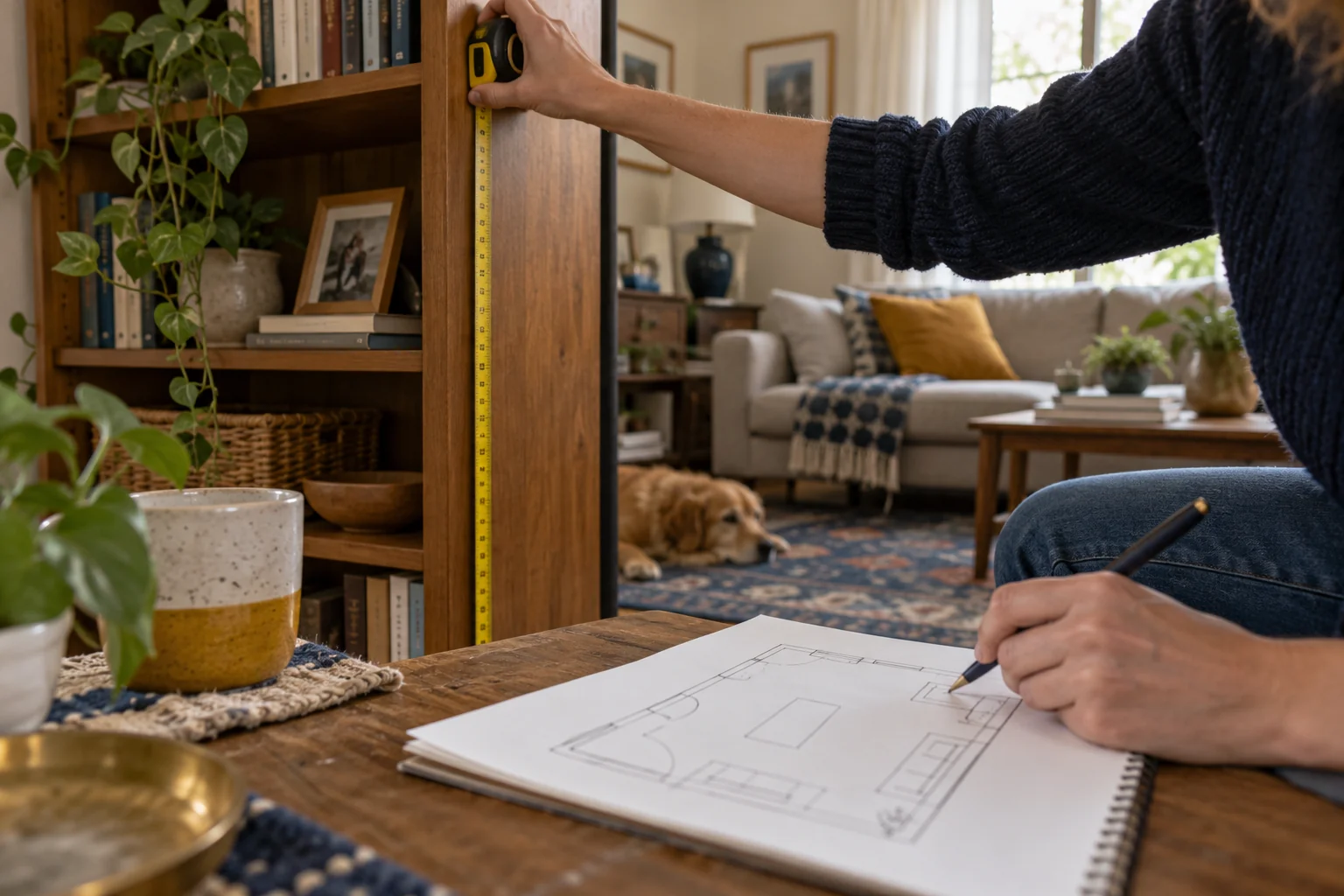
For furniture and large equipment, record the dimensions that matter: width, depth, height, and any parts that can be removed. Measure doorways, stairs, turns, and the intended destination space when access is available. A drawing or phone photo with measurements can help. Keep the units clear. The goal is to decide whether an item is worth moving and what preparation it needs, not to create architectural plans.
Check the path out of the current home as well as the path into the new one. Furniture that was assembled inside a room may not pass through the doorway intact. A bookcase may need to be emptied, stabilized, and carried by a particular route. A table may need its legs removed. If the work requires tools or a professional, add that task with time before the crew arrives. Do not assume movers will disassemble every item; ask what the purchased service covers.
Destination measurements can change a carry decision. A sofa that fits the room on a floor plan might block a door or heater in practice. A desk may fit only if it is placed before another large piece. Decide which measurements are needed before the sale or donation deadline. If you cannot enter the destination yet, use the best available plan, mark uncertainty, and avoid a confident promise to yourself that the piece will fit.
Keep a separate note for items with emotional or practical importance. The choice to carry an inherited cabinet may be settled even if it is inconvenient; the map then helps plan the handling. Other items may be easy to replace but expensive to transport. The record should make the tradeoff visible without pretending that every choice can be reduced to a dollar figure.
Connect the map to an estimate and packing plan
If you hire a mover, the room map can help describe the shipment consistently to each company. It should include unusual items, storage spaces, access limits, and services you expect the company to perform. The Federal Motor Carrier Safety Administration's checklist advises getting and comparing estimates and checking pickup, delivery, and services. For an interstate move, the agency also advises reviewing the inventory and completed documents on moving day. State and local rules can differ for moves that stay within one state.
Give the mover updated information when the household makes a material change. Adding a storage unit, removing several large pieces, or asking for packing service after the original estimate may affect the written arrangement. Keep the response with the estimate rather than relying on a memory of a phone call. The room map is a planning aid; it does not replace the mover's documents or the agreement.
For a self-managed move, use the map to judge vehicle space, loading order, supplies, and labor. A room with many books needs a different carton strategy from a room with pillows. A large item on an upper floor needs enough capable helpers and a safe route. The map can reveal whether one trip is realistic before the rental vehicle is booked.
Turn categories into staged packing work. Begin with things that can be unavailable for weeks, then schedule items needed until the last days. Reserve a clear “do not load” area for documents, medications, keys, chargers, travel supplies, and immediate-use items. Mark the room map when a category has been packed and where the cartons now stand. This keeps the survey useful after the visible shelves are empty.
Avoid treating the map as a final box list. You can later create a more detailed inventory for packing and claims. The first map answers where the goods are and what happens to them; a carton inventory answers what was packed and how to find it. They should agree, but they need not be the same document. A simple identifier can connect them when a high-value item moves from a room entry into a numbered carton.
Run a room-by-room example
Consider a two-bedroom apartment with a small balcony and a rented storage locker. The living room has a sofa, two lamps, a bookcase, and eight shelves of books. One lamp is borrowed. The bookcase was assembled in place and may need disassembly. The balcony holds planters and a folding table. The storage locker contains winter tires, a bicycle, and boxes from the previous move.
The first pass should separate facts from choices. Record the borrowed lamp as a return task, not a shipment item. Measure the bookcase and decide whether it fits the destination before buying protective materials for it. Ask the mover about plants and any other restricted goods instead of assuming they can travel in the truck. Open the old boxes enough to know their contents; “miscellaneous storage” is not enough information to estimate volume or decide whether they should move again. Check when the locker can be accessed and whether its contents are part of the mover's pickup plan.
Now add the bedroom. The household needs one bed until the last night, a work desk until the final weekday, and clothing for the travel period. The room can still be surveyed today. Mark the bed and desk for late packing or disassembly, and set aside travel clothing. The map does not force early packing; it lets the household sequence work without losing sight of it.
After decisions, the map might show the sofa and desk going with the mover, the bookcase awaiting a fit decision, the borrowed lamp to return, three bags of clothing for an accepted donation, and the bicycle traveling in a personal vehicle. Each route now has an owner and deadline. The exact list will be different for every home, but the method exposes the same kinds of handoff.
Reconcile the map before moving day
Review the map after each substantial sorting session. Mark items that have left the home, items newly added to the shipment, and open decisions. A photo taken at the start is a useful comparison, but walk the physical rooms again. Look in upper cabinets, behind doors, under furniture, in the refrigerator and freezer, on the balcony, and in every storage area you listed. People often remember a room and forget the spaces inside it.
Confirm the route for everything that remains. A sale pickup scheduled after the household must vacate is not a settled plan. A donation pile without an accepting recipient still needs work. A bulky item that cannot fit through the exit has to be disassembled or handled another way. Assign a final check to a person who will be present when the home is emptied.
Include the people and animals whose needs shape the room plan. A pet's carrier and supplies may need to stay out until departure; children's familiar items may need to travel separately from the truck. If care arrangements affect who can pack or supervise the crew, use the moving-day care guide when scheduling the final stages. The room map should show these items as intentionally kept available, not accidentally forgotten.
On moving day, compare the shipment with the current map and the mover's inventory where relevant. FMCSA advises accompanying the movers as they inventory goods, resolving questions about item condition, and taking a final look through the home before the van leaves. The household's room map helps that final look cover all the places that were found during the first survey. Save it until delivery and follow-up are complete; it can answer where an item came from and whether it was meant to travel.
The survey is finished when every space has been checked, every large or unusual item has a route, and the remaining open decisions have dates. It should let another household member understand the shipment without relying on the memory of the person who did the sorting. That is enough detail to make the next decisions with confidence and to catch omissions while there is still time to fix them.
Test the plan with an awkward item
A sectional sofa is a useful stress test because its pieces may fit the destination room while failing to clear the stair landing. Record the width and height of each section, the narrowest door, the turn at the landing, and any removable legs. Photograph the measurements with the tape visible. Check the route at both homes and note who can safely handle the lift. If the route is uncertain, ask the mover or building contact before moving day; do not assume a room diagram proves the carrying path works. The same method can be applied to a tall bookcase or refrigerator.