

Leaving an address does not automatically end the services attached to it. Electricity, gas, water, internet, trash, parking, and building services may each have a different account holder, stop date, final bill, equipment return, and deposit. A household can be physically settled in the new home while the old address continues to generate charges or while a final refund goes to an inbox nobody checks. Closing those accounts is a separate moving task with its own evidence and follow-up dates.
Make an account list before the last day at the old property. For each service, record the provider, account identifier stored securely, who is authorized to make changes, the requested stop or transfer date, the confirmation number, any equipment to return, and the expected final bill. Use the latest statement and bank or card history to find recurring services; memory alone often misses a small subscription or seasonal account. Keep the list with the move task board, not in a box packed for storage.
The closure record should connect to the household's overall cost record. The guide to tracking receipts and the final move cost can capture final utility bills, refunds, equipment fees, and overlap at the two addresses. An estimated last bill is not a settled amount. Leave each account open on the task list until the provider confirms the end of service and the final balance or refund is accounted for.
Separate the service date from the moving date
The day the truck leaves may not be the day the household gives up responsibility for a property. A lease may end later, a sale may close later, or a landlord may need power for a final inspection. Confirm the legal handoff date and who is responsible for service until then. Do not schedule a shutoff based only on the moment the last carton is loaded. If the old property must remain accessible for cleaning or repair, decide which utilities need to stay active and for how long.
Check the new property's start dates separately. A transfer request may close service at the old address and open it at the new one, but the dates need to be stated explicitly. Ask whether the provider treats the addresses as one account or two. The household should verify that essential service at the new home is active before ending service at the former one, while avoiding unnecessary overlap where possible.
For a shared household, confirm whose name is on each account. The person who pays a bill may not be the named account holder authorized to cancel it. A roommate's internet plan, landlord-paid water, or building-managed trash pickup may require a different process. Do not try to change an account you do not control; ask the responsible person for written confirmation of what they will do and when.
Record the date the household requested a stop and the date the provider confirmed it. Those can differ. “Submitted online” is not the same as “service ends Friday.” If the requested date falls on a weekend or holiday, ask how the provider handles it. Save the confirmation screen or message and note any reference number. If a technician visit or remote meter action is needed, record the appointment and who must provide access.
Check each kind of account on its own terms
Electricity, gas, and water may have meters and final readings. Internet and television services may have routers, set-top boxes, or other rented equipment to return. Trash service may have a cart or pickup schedule. Parking, storage, security, lawn care, and cleaning may be separate recurring agreements. A building may charge for a move-out elevator or fob replacement. The account list should name each service and its specific closure action, rather than one vague “cancel utilities” task.
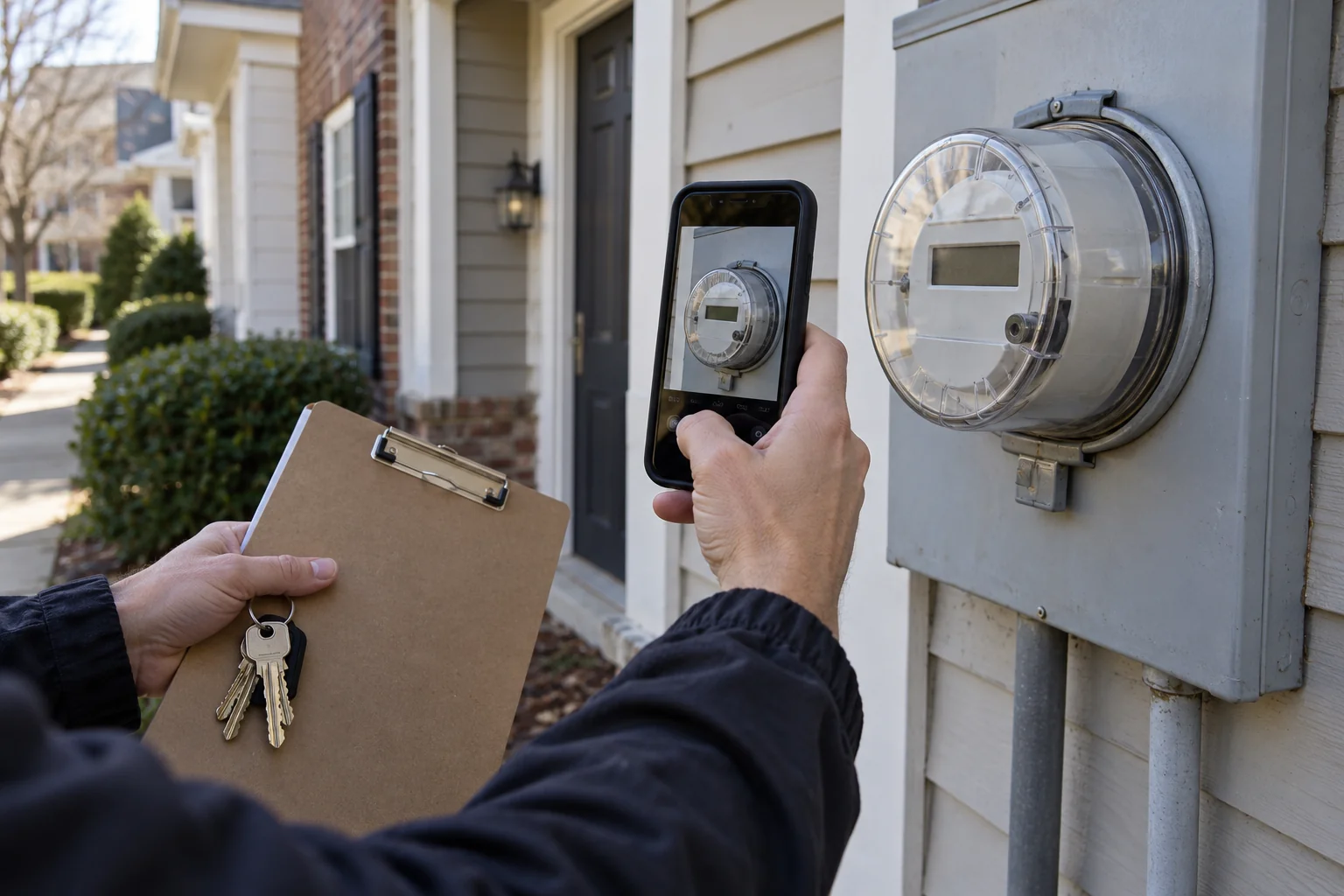
Ask the provider how a final reading is established. It may be remote, provider-read, or customer-submitted. When a customer photo is appropriate, take a clear image that includes the meter identifier and reading, with a timestamp and address note in the household record. Do not open sealed meter equipment or enter an unsafe area to obtain a photo. A photo helps compare a later bill, but the provider's accepted reading and terms control its calculation.
For gas, electricity, or water, do not shut valves or switches in a way that could damage the property or violate an agreement. The provider or property manager can explain the required handoff. If there is a leak, smell of gas, exposed wire, or flooding, treat it as a safety issue and follow the provider's emergency instructions rather than a routine account-close task. The household's administrative checklist is no substitute for a qualified response to a hazard.
Return rented equipment by the documented method. Ask whether a shipping label, store drop-off, technician pickup, or landlord handoff is accepted. Photograph serial numbers and the contents of the return package, then keep the tracking number or receipt. A note saying “router returned” is weak evidence if the provider later bills for an unreturned device. Do not leave equipment in an empty apartment assuming the next occupant or manager will return it unless the provider confirms that arrangement.
Some services renew automatically. Review the contract or account page for cancellation timing, notice periods, and early-termination terms. Ask for the effective date and any final charge in writing. Do not assume deleting an app or removing a payment card closes a service. If a provider offers a transfer, compare the transfer terms with closing and opening a new account; the household's best option depends on its actual agreement.
Record the property handoff
Before surrendering keys, walk the old property for items and service equipment. Check closets, cabinets, laundry areas, garage, attic, basement, outdoor storage, and places where routers or security devices were mounted. Photograph the property's condition as allowed by the lease or sale arrangement. Note the date and person receiving keys, fobs, garage remotes, and access cards. Keep any signed handoff receipt.
Coordinate the handoff with the landlord, seller's agent, or property manager. Ask whether they expect water, power, heating, or another service to remain active through an inspection or closing. Get the answer before the stop request becomes effective. If responsibility transfers on a particular date, record that date in the account list. The household should not decide unilaterally that a new occupant will take over its account; each provider has its own transfer or new-account process.
Equipment used for furniture setup can be easy to leave behind at the old address. When the household is busy reassembling and checking furniture at the new home, the drill, instructions, hardware bag, or wall-anchor tool may still be in an old closet. Include a final sweep for those items before turning over keys. That physical closeout supports the administrative closeout: nobody needs a return trip after utilities and access have ended.
If a service provider must enter after the household leaves, arrange access through the person authorized to grant it. Do not leave a key in an unsecured location or share a code broadly. Write down who will meet the technician, what equipment will be removed, and when the visit is complete. Check whether the property manager has approved any removal of installed equipment.
Handle the final bill and deposit
Give each provider a reliable billing address or electronic delivery method. A change-of-address request for mail can help, but it does not replace updating the account's own contact details. Check that the old address is not still set as the only destination for a final paper bill. Save a working email address and monitor it after the move, including messages filtered into an account portal.
When the final bill arrives, compare its service period with the confirmed stop date. Check the meter reading or usage basis when applicable, recurring charges, deposits, credits, taxes, and one-time fees. A final bill can include charges earned before the stop date even when it arrives weeks later. Record what the household paid, what remains disputed, and when the provider says the account is fully closed.
If the bill appears wrong, ask the provider for an explanation using the account's official channel. State the confirmed service-end date and attach the relevant confirmation or meter photo. Keep the conversation factual. Do not discard the bill or ignore a payment deadline while waiting for an answer; ask the provider how a disputed amount should be handled under its process. The applicable rules vary by service and location.
Track refunds and deposits as carefully as bills. Ask where a refund will be sent and when the provider expects to issue it. If it goes to a closed bank account or old address, resolving it may take longer. Mark the account complete only when the refund is received or the provider confirms none is owed. A household cost sheet should show deposits returned separately from new-home deposits paid, so a refund is not mistaken for a lower moving expense.
Review automatic payments after the final balance is settled. An active payment method may be useful for the final bill, so removing it too early can create a missed payment. Once the provider confirms closure and the account shows a zero balance, remove or update payment details according to your preference and retain the final statement. Do not close the household's record merely because a bank transaction stopped appearing.
Protect the account from confusion and fraud
Do not assume an account labeled “transferred” has the same meaning for every service. An electric provider may keep one customer profile with separate service addresses. An internet provider may create a new order and leave the old equipment tied to the prior address until it is returned. Ask for both sides of the transaction: the old address's end date and the new address's start date. Save both confirmation numbers if there are two. If the provider sends a technician to the new home, verify that the appointment does not depend on returning equipment at the old one first.
Check specialized services that may not appear in the main utility list. A home security subscription can include monitoring, rented sensors, and a separate installation agreement. A water delivery, pest service, lawn contract, or private trash pickup can continue to bill after the household leaves. Review several months of bank or card statements for recurring charges and compare them with the account list. When a charge belongs to a household member's separate account, assign that person the closure task rather than trying to cancel it without authorization.
If a provider says the new resident must call before the old account can close, ask for the exact policy and the household's responsibilities in writing. The departing household should not share a password, payment method, or personal identifier with the next occupant to make a transfer easier. A property manager or utility company can explain the authorized handoff. If the account cannot be closed on the expected date, record the reason, the person who agreed to resolve it, and the next check-in date.
For a house with seasonal systems, ask the owner or manager what must remain running to protect the property between occupants. A water shutoff, heat setting, or security change can have consequences beyond a monthly bill. The household should not make those choices solely to save a few days of charges. Agree on responsibility and service status at handoff, and use qualified help when a physical system needs adjustment.
Moving creates many legitimate notices, which makes an unexpected “urgent utility” message easy to believe. Use the provider's known website, app, or phone number from a statement to check a surprise balance or cutoff threat. The Federal Trade Commission's utility scam guidance warns about impersonators who demand immediate payment through unusual methods. A household should verify a new payment instruction independently, especially when the caller claims the old account must be settled at once.
Keep account numbers out of broad household texts and photographs meant for a public or shared folder. A meter picture may include an identifier; store it with the private move records. If a roommate or new occupant needs service, they should set up or transfer an account through the provider's process rather than using the prior resident's login. Change passwords or remove old property devices from an account when the provider instructs you to do so.
If a provider claims an account remained open after the requested date, retrieve the original confirmation and ask it to explain the difference. Record each contact with a date and case number. Do not argue from memory about what a representative supposedly promised. A saved confirmation, handoff date, and final reading make the question precise.
A two-address example
Suppose a couple leaves a rental apartment on Friday, but the lease ends Monday after a cleaning and inspection. They move into a house on Thursday. They list electric, gas, water billed through the landlord, internet, parking, and a storage unit. The new home's electric and internet start Thursday. The old apartment's electric and gas remain active through Monday because the cleaner and manager need access. Parking ends Friday, and the internet provider confirms a Friday disconnect with a router return due the following week.
On Friday, one adult photographs the old electric meter where accessible and records the time. The other returns the parking pass and receives an acknowledgment. They sweep the apartment for hardware bags and rented equipment before turning over most keys. The manager retains access for the final inspection and confirms the remaining utility responsibility through Monday in writing.
On Monday, the couple attends the inspection, records the key handoff, and verifies that the utility stop requests are effective. They mail the router with the provider's label and keep the tracking receipt. Two weeks later, the old electric bill arrives with usage through Monday and a deposit credit. They compare it with the stop confirmation and record the actual amount paid and credit received. The storage unit remains open because it still contains furniture; they do not mark it closed simply because the apartment is empty.
The couple now has a short open list: wait for the gas final bill and verify the router return is credited. Every other account has a confirmation or final statement. The list shows exactly what remains, instead of a vague worry that “the utilities might still be running.”
Close the account list, not just the old door
Schedule one review after the move for services that may bill late. Check every account for a confirmed stop or transfer date, final statement, settled balance, equipment return, and refund outcome. Mark an account complete only when those pieces are done. If a service continues intentionally, such as storage or security at a property still owned by the household, give it a new owner and review date rather than leaving it in a half-closed state.
Keep the final statements and confirmations with the move records for the period appropriate to the household's finances and agreements. The useful outcome is straightforward: the old property is handed off, the new property has the services it needs, and no recurring account is left active merely because everyone assumed someone else had closed it.
Match the final statement to the handoff
When the final bill arrives, compare its service address and dates with the move-out record. Check whether a deposit credit, equipment return, or autopay charge is still pending. If the statement covers days after the agreed stop date, ask the provider for an explanation and provide the confirmation number. Save the response with the bill rather than relying on a phone note alone. For a service that transferred, verify the new account separately; closing the old account does not prove the new one is active. Mark each account complete only after the final balance and equipment obligations are clear.