
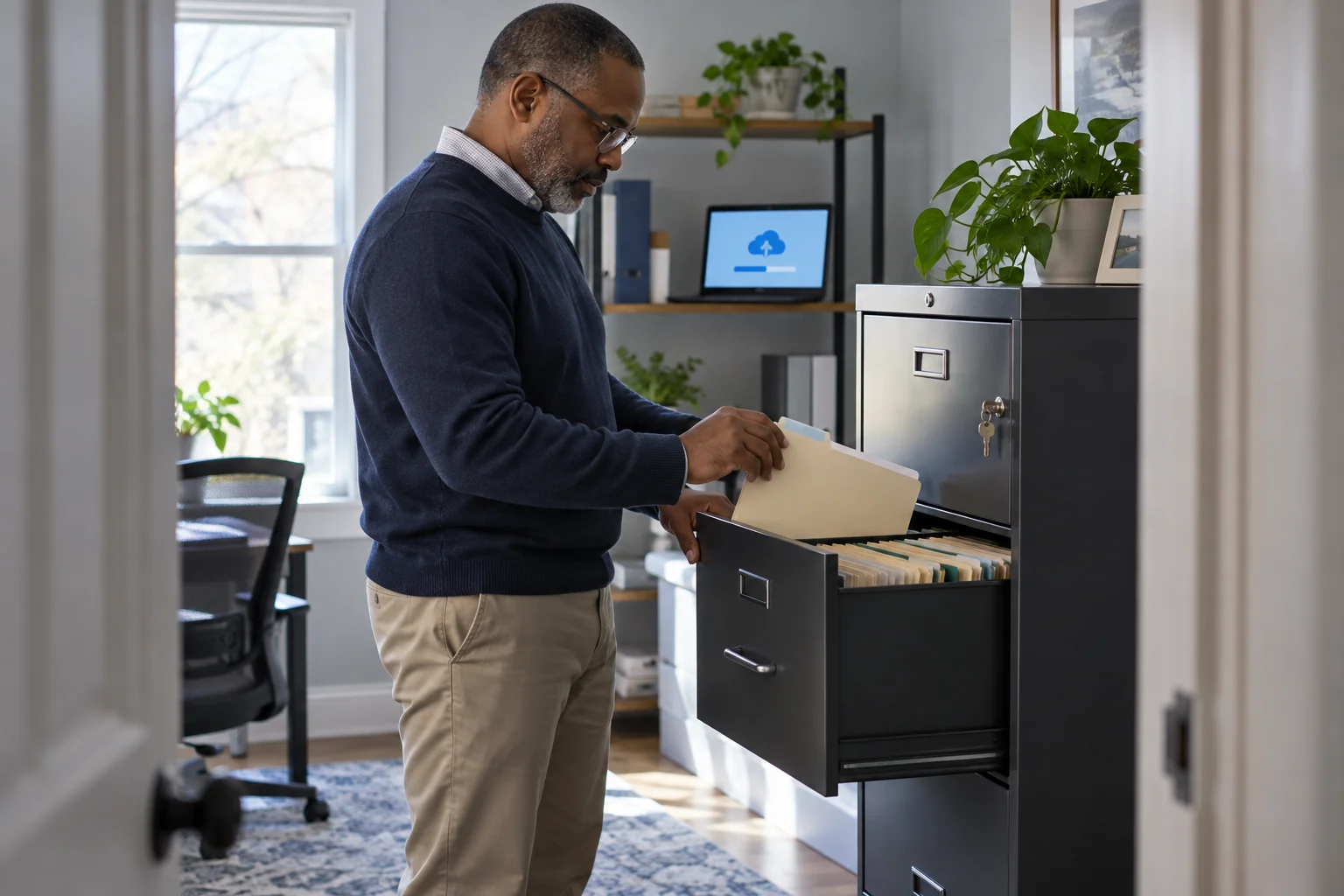
Moving creates a trail of estimates, contracts, inventories, photos, receipts, account confirmations, and messages. Those records are useful only if the household can find the right version when a late bill, missing item, or service question appears. A good system is small enough to maintain during a busy week and secure enough for documents that include addresses, account numbers, and personal information.
Choose one household owner for the move archive. That person does not need to handle every provider conversation, but should know where final documents land. Give another trusted adult a way to access the essentials if the owner is unavailable. Start with a single folder or binder for active paper and one digital location for scans and downloaded files. Do not build five parallel folders in email, phone photos, cloud storage, and desktop without a clear primary copy.
The records should answer active questions, not simply preserve history. The guide to tracking receipts and the final move cost shows how invoices and refunds support a final total. A delivery inventory and condition photo answer a different question. Keep both in the same move archive but separate enough that the household can reach the relevant evidence without searching through every grocery receipt from moving week.
Build a small structure around decisions
Use broad folders such as planning and contracts, pickup and delivery, property and utilities, costs and receipts, and open issues. Within them, sort by provider or event only when the volume justifies it. An archive with twelve empty categories is harder to use than five clear ones. Put a short index at the top naming the key file or paper section for the mover, landlord or property manager, storage provider, and utilities.
Keep the original estimate and every later revision. The latest version matters for current work, while earlier versions explain what changed. Label a document “superseded” rather than deleting it. For a professional move, keep the order for service, bill of lading, inventory at pickup, delivery receipt, change orders, and payment records together. For a rental truck, keep the rental agreement, checkout and return condition records, and final invoice. Different services produce different documents; the folder should reflect what actually happened.
Separate source documents from the household's summary. A task board or timeline can state “delivery moved to Saturday,” but the dispatcher email or amended service order is the evidence. Link or file that source beside the note. If the summary later proves incomplete, the household can return to the original message. Do not rewrite an original document to make it match a later recollection.
Use the same naming convention across the archive. A date, provider, and purpose often suffice: “2026-10-17_mover_delivery-inventory” or “2026-10-20_electric_final-bill.” Use the date the document or event occurred, and add a version when necessary. Names like “final-final2.pdf” or a phone's automatic image number become difficult to interpret after a month.
Capture records while they still exist
Photograph paper forms immediately after signing, including every page and the visible signature or confirmation section. Check that the image is sharp and not cut off. Ask for an electronic copy from the provider when available. A photo is a backup; it should not replace the provider's complete copy if that can be obtained. Put the file in the right folder before the next day's photos bury it.
Save messages that change scope, price, timing, or custody. A short recap email may be more useful than dozens of call-log entries. Record who said what, when, and which shipment or address it concerns. Keep a screenshot only if it shows the full context and date; an isolated line with no sender can be hard to interpret. For a consequential call, write a brief note and send a confirmation request through the provider's documented channel.
Store photographs with the event they document. Pickup condition photos belong with the inventory; a damaged carton photo belongs with its issue record; a meter reading belongs with the utility closeout. Do not keep all move photos in one camera roll album with no labels. Use an item tag or simple description in the file name, and keep the original photo where possible so its date and resolution remain available.
If a provider portal displays a confirmation that may not be emailed, download or capture it while signed in. Record the confirmation number and effective date. Check that the account's name and address appear on the saved copy if those details matter. Do not assume the portal will keep an old order visible forever or that a message will remain in a phone after an app is changed.
Protect sensitive material
Move records can contain a driver's license, medical information, account numbers, card fragments, signatures, and access codes. Keep those in a restricted section, not the general folder shared with helpers. A friend helping carry boxes may need the destination address and contact number, not a copy of the household's lease or full inventory. Grant access according to the task and remove temporary access when it ends.
Use a password-protected account and enable available multifactor authentication for the digital archive. Back up important files in a secure location separate from the primary device. The U.S. Cybersecurity and Infrastructure Security Agency's data-protection guidance recommends encryption and backups to reduce the risk of loss or unauthorized access. A single phone or laptop can be lost during a move, so critical records should not live only there.
Lock up paper containing personal or financial information. The Federal Trade Commission's document-protection advice distinguishes records to retain from those to destroy securely. The household should not put an old account statement with identifying details into open recycling. Use shredding or another secure disposal method when it is time to discard sensitive paper.
Do not email full sensitive files to multiple people merely for convenience. Share a limited copy or a secure link that can be revoked when appropriate. Remove passwords, account identifiers, and unrelated pages from a document before sending it to a provider who needs only one receipt. Keep the unredacted original in the household archive so a later question can still be answered accurately.
Make the archive usable during the move
Keep an active packet with the documents needed at pickup and delivery: service agreement, current schedule, contact sheet, inventory, building access confirmation, and payment terms. A printed copy can help when connectivity fails. The packet should be carried by the household lead, not loaded into the moving truck. If two people may handle separate handoffs, give each the specific documents required and identify which copy is the master.
At the destination, choose a fixed place for the packet. A drawer, document pouch, or locked cabinet is better than a countertop that becomes a landing zone for every loose object. Tell the adults where it is. When someone removes a form for a call, return it immediately afterward. The archive is only useful if the household can find it under moving-day pressure.
Use a brief daily filing habit while the move is active. At the end of the day, put new paper in the right section, rename new photos, and update open issues. This can take ten minutes. Waiting until the end of the month invites missing context: a receipt may be unreadable, a timestamp forgotten, or a message thread deleted. The routine should be short enough that it survives a tiring week.
Mark outstanding documents. If a final invoice, deposit return, or second delivery receipt has not arrived, list it as pending with an expected date and owner. Do not create an empty file that looks complete. The archive should tell the household both what it has and what it still needs to obtain.
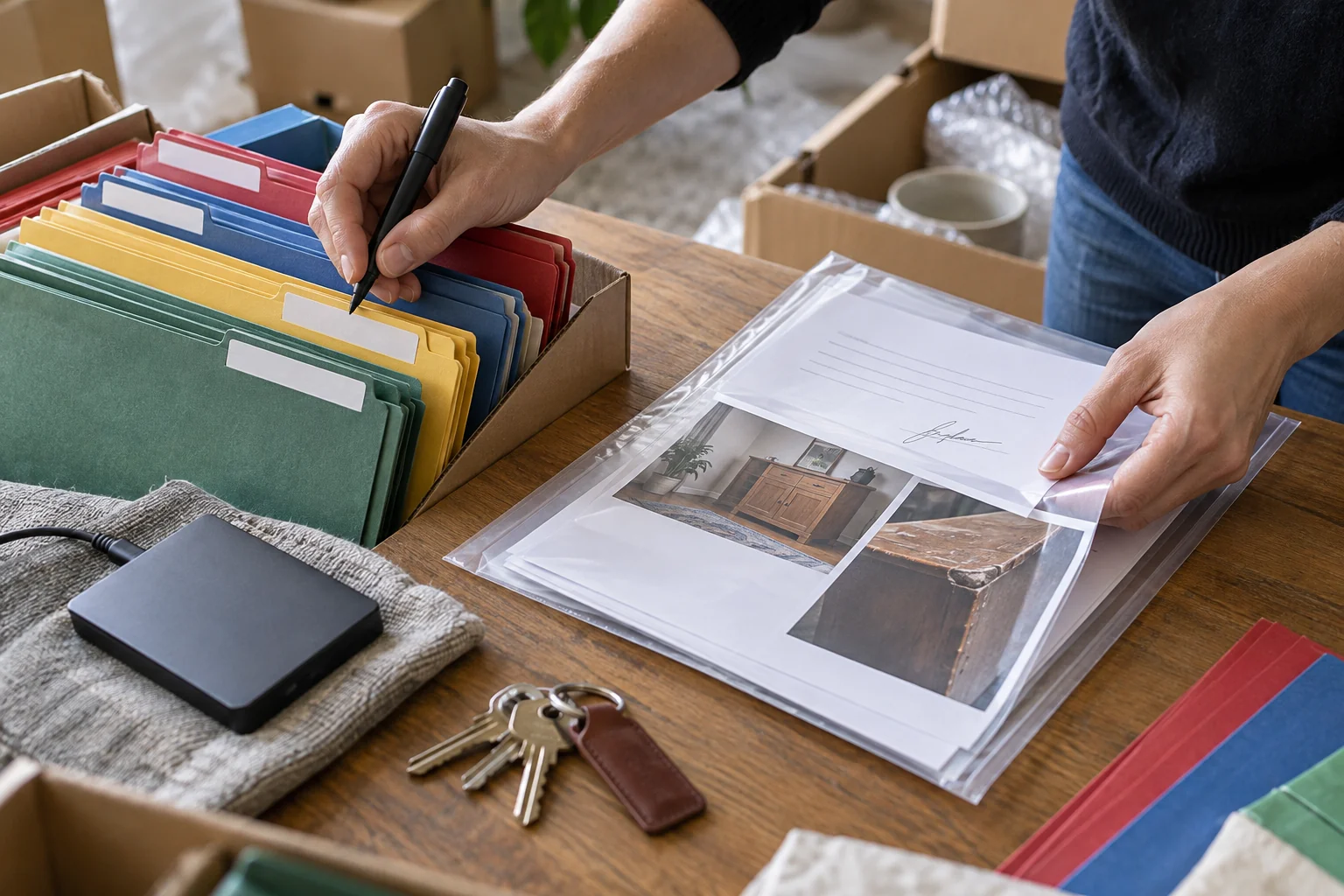
Keep open issues connected to their evidence
Give each unresolved issue a simple identifier: missing tag 42, damaged dresser, old internet credit, building wall repair. The issue record should state current status, next action, owner, due date, and links to the relevant documents. A photo alone does not tell the household whether a claim was filed or whether the provider responded. The guide to following up on claims and unfinished services uses that record to move each matter to a clear outcome.
Keep communications in chronological order. Put the original observation first, then notice sent, claim or case number, provider response, inspection, decision, and completion evidence. Avoid editing an older note to reflect a new answer. Add a dated entry so the sequence remains understandable. If a provider changes its position, the archive shows the change rather than only the latest statement.
For a missing item, include the pickup inventory line, delivery exception, photos of the item if available, the household's search notes, and the provider's response. For damage, include condition photos before and after, packaging photos, repair estimate, and claim correspondence. For a cost dispute, include the quote, change order, invoice, payment record, and the exact line being questioned. The relevant subset is easier to share than the entire move archive.
Do not store an issue solely in a messaging app thread. Group chats contain opinions, jokes, and unrelated arrangements that can obscure the important facts. Copy the confirmed decision or evidence into the issue record. If a helper finds an item, note where and when it was found and close the issue. An archive should reflect the current status, not freeze the first problem report forever.
A practical example of retrieval
Imagine a household receives a bill for an extra day of storage three weeks after delivery. The household's cost log shows the charge as unresolved. In the archive, the service folder contains the original order, a message about a delayed delivery date, and the final delivery receipt. The household checks whether the storage day was requested, offered, or imposed under the agreement. It can ask a precise question with the relevant documents attached rather than sending a vague complaint.
The same week, a fragile lamp shade is found cracked during unpacking. The issue folder has the pickup tag, delivery status, photo of the carton as opened, and the new damage photo. The household files the notice through the proper provider channel and adds the case number. The storage fee and lamp damage are different issues, but the archive supports both without mixing their evidence.
Later, the building returns an elevator deposit. The household saves the refund confirmation in the property section and updates the cost log. The issue is closed. The key point is not that every document is perfectly categorized; it is that a normal person can trace each question from a summary to the source and see whether the matter is still open.
Retain and retire records deliberately
When several adults contribute files, set one intake rule. Each person can upload or hand over a new document, but the archive owner assigns its final name and location. Otherwise the same signed form may appear as three differently named copies while a later amendment is never filed. Make it easy to submit a record: a shared inbox or one folder named “to file” is enough. Clear that intake area daily during the move, then weekly while late bills and claims remain active.
Preserve a readable version of electronic records. A screenshot of a narrow phone screen may cut off a fee, date, or provider name. Download a PDF or take several overlapping screenshots if that is the only option, then check them before the portal session ends. For email, save the complete message or print it to PDF with sender, recipient, date, and subject visible when those details matter. A pasted sentence without its context may not show which shipment it describes.
Keep versions in order rather than deleting superseded files. An original delivery window, a revised estimate, and a final invoice can all be relevant to understanding a delay charge. Add a short note that identifies which version governed the final work. If two files have the same name, use a date or version suffix. Avoid changing the content of a signed document; add a separate household note about any error or disagreement.
For physical paperwork, use sleeves or folders that let you remove a form without tearing staples or separating pages. Keep multi-page inventories together. If a receipt is on fading thermal paper, make a readable copy soon and keep the original until the relevant account is settled. Put small slips in an envelope labeled by provider or week rather than loose at the bottom of a binder. A paper system can be simple and still preserve sequence.
Plan for a device failure or lost phone. Confirm that the archive owner can sign in from another device using a recovery method they control, and that a second trusted adult knows where the emergency contact and contract copies live. Do not store the only recovery code inside the account it is meant to unlock. For the most important documents, a secure independent backup can keep a lost laptop from turning into a lost move history. Protect that backup just as carefully as the main archive.
Avoid mixing old and new property records merely because they mention the same service. An old-address electric final bill and a new-address electric start confirmation are separate events. Put the address or a clear short label in the file name. A provider may use one customer number for both, which makes the location detail especially useful. When reviewing a surprising bill, the household can then tell at a glance which property and service period it covers.
If a record must be shared with a claims adjuster, provider, insurer, landlord, or adviser, send only the relevant subset. Include a short cover note identifying the issue and the enclosed files. Keep a copy of what was sent and the date. A private archive is not a dumping ground for every recipient; its value comes from selecting the correct evidence without exposing unrelated household details.
After the move, reduce the active packet to documents still needed for claims, final bills, property handoff, and the final cost review. Move completed material into an archive folder rather than deleting it immediately. The right retention period depends on the document, contract, tax situation, and applicable rules. Important identity, property, and financial records may have different lifetimes from a routine supply receipt. Use the provider's terms and qualified advice for specific legal or tax needs.
Review the archive after the last open issue closes. Remove duplicate blurry photos and redundant drafts only after confirming a complete original exists. Shred sensitive paper that no longer needs to be kept. Revoke access shared with temporary helpers. Check that the remaining digital files can be opened and that the backup works. A backup icon is not proof if nobody has ever tested retrieval.
Leave a simple index for the future: where the move contract is, where final costs are, and where any claim outcome was saved. The household should be able to answer a question months later without reconstructing the whole move. Records are finished when they are both protected and findable by the person who needs them.
Test the archive before you need it
Ask another household member to find the signed moving agreement, the delivery inventory, and the final utility confirmation without verbal directions. If they cannot, simplify the folder names or add a short index. Check whether phone photographs have actually been copied into the archive and whether a shared link still works. Keep sensitive documents in a location with appropriate access controls and a backup, while making the few urgent records reachable during travel. A system that only its creator can understand will fail when that person is unavailable for a claim call or a billing question.