
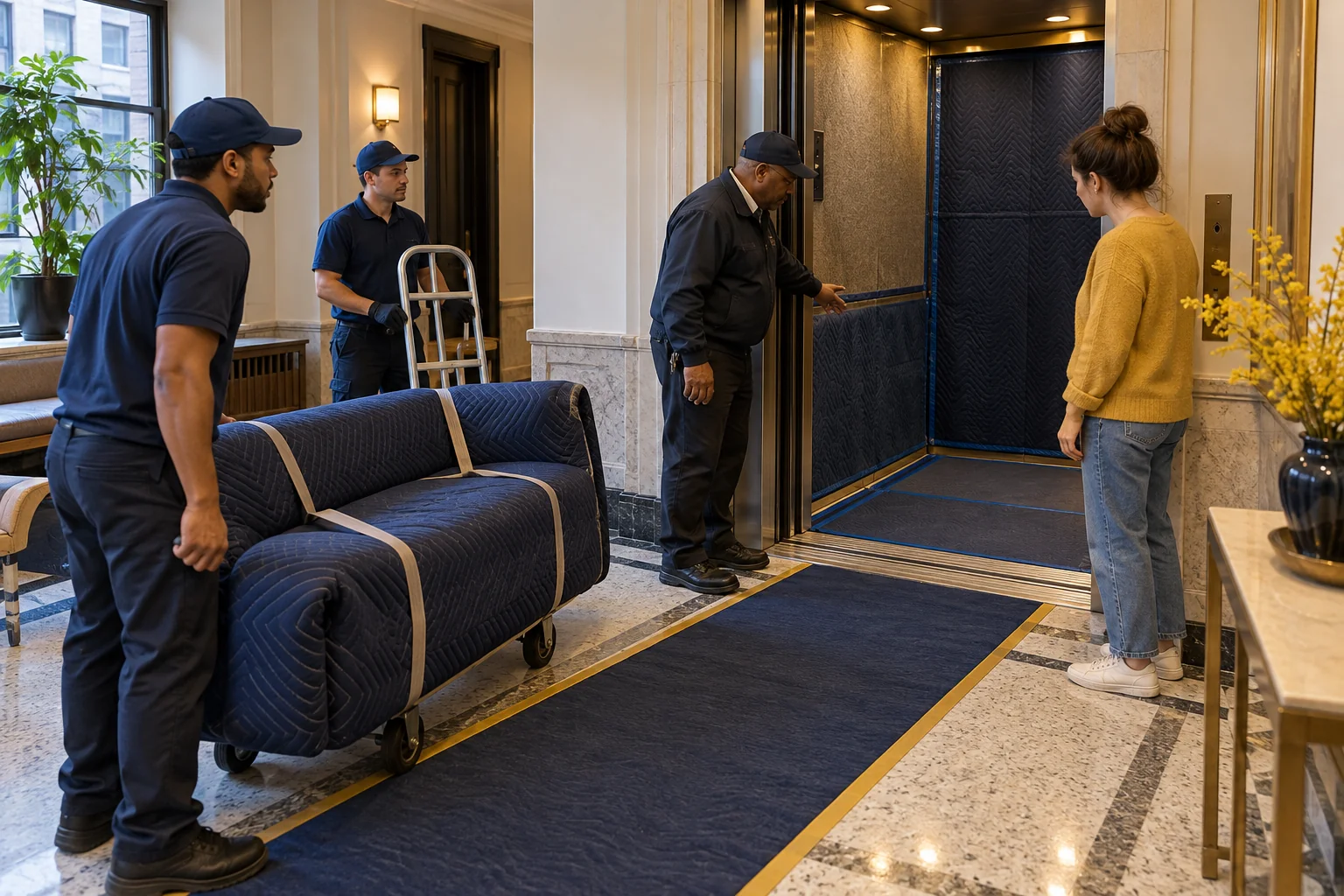
The destination can be ready for a moving truck and still be unready for the actual unload. A reserved elevator may open onto a blocked hallway. The front door may be unlocked but the room labels are missing. A person may have the keys while the person who knows the furniture plan is still on the road. Preparing the destination means turning the space into a safe, usable path from vehicle to final room, with someone able to answer questions as goods arrive.
Start by walking the route an item will take. Look from the legal parking or loading position to the entry, through the building, and into each room. Check dimensions for large furniture, door swings, stairs, corners, and where a hand truck can turn. If a route depends on an elevator, confirm its operating hours and reservation. A reservation in an email does not help if the desk has no record of it on moving day. Put the building contact and confirmation with the household's move records.
Do this work before the crew reaches the door. The guide to recording delays and changes during the move explains how to keep a factual timeline if access or arrival shifts. At the destination, the immediate goal is simpler: make each known constraint visible, assign one person to resolve it, and give the crew a clear route and room plan.
Confirm access from curb to room
Check the loading location against the vehicle you expect. A small van and a full moving truck may need different space. Ask the building or local authority what parking or loading permission is required and who can authorize it. Do not assume a vehicle can stop on a narrow street, fire lane, or shared driveway because it is only unloading. If a permit, cone placement, gate code, or dock reservation is needed, confirm it before arrival and keep the details reachable.
Walk the entrance at the time of day the move is expected. A door that looks wide enough may be partly obstructed by a planter or another tenant's delivery. A loading dock may have a height limit. A ramp can be unavailable or slippery in rain. Note thresholds, steps, uneven pavement, and poorly lit areas. Ask the building which route movers must use; a convenient passenger entrance may be prohibited for freight.
Measure large pieces and the narrowest points on the route. Include the item with protective padding when judging clearance. Some furniture can be disassembled, but not every piece can be safely forced through a turn. Decide in advance who may authorize disassembly, what tools are needed, and where small hardware will go. If a piece will not fit, ask for a safe alternative rather than letting a crew improvise under time pressure. Keep measurements in ordinary inches and label the doorway or stair to which each one applies.
Confirm that the destination can be opened. Test keys, access cards, codes, and any intercom before the truck arrives. If a landlord or superintendent must be present, verify the appointment and a backup number. Keep a second authorized person able to meet the crew if the primary contact is delayed. Do not distribute access codes broadly in a group chat; share them directly with the people who need them and change temporary codes afterward when appropriate.
If the move uses a freight elevator, check the reserved window, which floor can call it, whether a building attendant controls it, and whether wall padding or floor protection is required. Ask how the crew reaches it from the loading area. The elevator should be available for the agreed period, but have a plan if another tenant's move or a repair interrupts access. A crew waiting beside a truck while someone searches for a manager is an avoidable delay.
Make the route safe without overpreparing
Clear boxes, rugs, cords, shoes, and loose objects from the working route. Keep pets and small children in a separate secure space away from open doors and moving equipment. If a dog must leave the apartment during the unload, decide who handles the leash and where the animal will stay. A door repeatedly propped open can change both pet safety and building security.
Protect floors and corners as the building or provider requires. Ask who supplies runners, door-jamb covers, or elevator padding, and who installs and removes them. Use material that lies flat and does not create a trip hazard. Do not tape a surface without checking whether the adhesive can damage its finish. If the crew supplies protection, make sure the route is clean and dry enough for it to work.
Keep stairwells, fire exits, electrical panels, and shared corridors clear. A temporary stack of cartons can quickly become a blockage when the crew is moving faster than the room team can sort. Designate one legal staging zone if the building permits it, and keep it small. Items should flow through to assigned rooms rather than collect in a doorway. If there is no suitable staging zone, direct each item to its final room as it enters.
Check light, utilities, and temperature. Unloading a dark basement or unlit stair at dusk increases confusion. Test switches and bring a safe portable light if needed. Ensure the water and a bathroom are available to the household and crew under the property's rules. In very hot or cold weather, plan where people can take breaks and where temperature-sensitive items should go first. These ordinary conditions affect how smoothly the work proceeds.
Do not schedule cleaning, painting, furniture assembly, and unloading to occupy the same route at the same time. If a contractor is still working, confirm which rooms are safe to enter and whether wet floors or tools create hazards. Move the contractor's work window or the unloading sequence if necessary. A fully empty room is not useful if the path into it is blocked by equipment.
Give every item a destination
Make a simple room map before the truck arrives. Give each room a short name or code that matches the carton labels. “Back bedroom” can mean different things to different people; “Bedroom 2, left of hall” is clearer. Put a visible sign near each doorway using wording that is legible from a few steps away. Avoid covering locks, alarms, or building notices.
Identify the few items whose placement is hard to change later: large sofas, beds, desks, appliances, and heavy cabinets. Sketch where they should land and check outlet, window, and door clearance. Decide whether a bed frame must be assembled before the mattress can be used that night. Place an uncertain item in a safe temporary spot only if it will not block the route and the household can move it later.
Assign a destination lead to answer placement questions. That person should have the room map, inventory, and authority to make ordinary decisions. A second household member can receive and count items at the door. If only one adult is present, prioritize identifying and recording incoming items over perfect room arrangement. Move-day placement can be adjusted; an unnoticed missing piece is harder to reconstruct.
Tell the crew how labels map to rooms before unloading starts. Walk the lead mover through unusual directions and show where fragile or priority cartons should go. If a label is missing, set the carton in a defined question area and resolve it promptly. Do not let a pile of “unknown” boxes become a second inventory that nobody owns.
Keep a clear path to first-night necessities. The household may need medication, a child's sleeping kit, pet food, chargers, bedding, and basic bathroom supplies before the whole truck is unloaded. If those items traveled separately, confirm who has them. If they are on the truck, tell the crew which marked cartons need to be accessible. Do not ask workers to open every carton to find an unmarked item.

Coordinate the timing with the people who control it
The household, mover, building, and any helpers may each have a different clock. Put the confirmed arrival window and building access window in one shared note. Include any hard cutoff for an elevator, dock, parking permit, or staff member. If the moving service has a delivery spread rather than an exact appointment, keep that distinction visible. A building slot should be arranged with realistic buffer where possible.
If arrival changes, update the people who can change access first. The building may be able to extend a slot if contacted early, while a helper can simply start later. Record who confirmed each revision. Do not treat “we should be okay” as authorization for a truck to enter after a posted cutoff. Ask for the revised time and any conditions in writing when the change could affect fees or access.
For a do-it-yourself move, match the number of people to the work and the route. One person may need to stay with the vehicle while another directs items inside; a third may be needed to manage doors or stairs. Do not leave a rental vehicle unsecured or idling in an unsuitable location while everyone carries furniture. Use appropriate equipment and follow the rental agreement and local rules.
For a professional move, ask the lead worker where the crew wants the household to stand during unload and how they prefer to identify items. Stay available, but do not step into the carrying path or redirect every crew member independently. Route questions through the lead so the plan remains consistent. Point out delicate floors, low fixtures, and any room that is off limits before the first large piece moves.
Check condition as goods enter
Preparing the destination includes setting up a place to reconcile the shipment. Keep the pickup inventory, room register, pen, charged phone, and camera or phone camera together near the receiving point. Have enough room to read a tag without blocking the crew. The guide to reconciling the inventory at delivery explains the item-by-item check and how to record exceptions before signing delivery paperwork.
Agree on a simple flow. The receiving person reads or photographs an item number, marks it seen, notes visible condition, and sends it to the right room. If several cartons share a generic description, use their individual tags or other distinguishing marks. Do not mark an item received merely because someone says it is somewhere on the truck. The check should follow what physically enters the home.
Create a small exception area for a damaged carton, an item with a missing part, or a piece whose room is unclear. Ask the crew lead to see the concern while the item is accessible. Photograph the item and packaging before it is hidden under other goods. Do not open a fragile carton in the middle of the traffic path. Shift it to a safe spot and inspect it without interrupting the whole unload.
If the shipment arrives in more than one vehicle or on more than one day, separate the waves in the register. Record which items were delivered in each wave and who signed for each. A missing carton may still be on a later vehicle, but that should be confirmed by the provider rather than assumed. Keep all delivery paperwork together so the final count can be completed when the last wave arrives.
Use a destination walkthrough
Consider a family moving into a third-floor apartment. The building has one freight elevator and a dock reservation from 1 to 4 p.m. The truck is expected at 1:30. On the previous day, the family checks that the elevator reservation appears on the building calendar, tests the access card, walks the dock-to-apartment route, and measures the hallway turn for a long sofa. They learn that the dock door needs an attendant, so they add the attendant's direct number to the contact sheet.
That morning, one adult places room signs and clears the hall. Another puts the pickup inventory and a charged phone at a table inside the apartment. They set aside the first-night bag and make a pet plan so the apartment door can remain in active use. They do not stack packed belongings in the corridor, because the crew will need that space for the sofa.
The truck arrives at 1:40. The household lead confirms the dock, introduces the mover to the building attendant, and points out the protected elevator route. A large desk is directed to the office before cartons fill the doorway. At the receiving table, the second adult checks tags as items enter. A carton labeled only “office” goes to the question area rather than being silently counted as an expected computer carton.
At 3:15, the crew sees that unloading may pass the 4 p.m. cutoff. The lead asks the attendant whether the slot can be extended and calls the mover's dispatcher if the crew needs a revised plan. The household records the answer and tells the receiving person what will happen. The crew does not guess that the elevator may be used after hours. Because the route and room plan were settled before arrival, this conversation can focus on the remaining work.
Close access properly
Some destinations need a second access check that is easy to miss. In a townhouse, a garage may seem like a convenient entry, but its interior door, steps, and ceiling clearance may be worse than the front route. In a high-rise, a service entrance may lead to a locked corridor after the freight elevator. At a house with a steep driveway, the truck may have to stop farther away than the crew expected. Walk the whole route, not just its first door, and tell the provider about a long carry or difficult turn before work begins. If the actual route differs from the booked description, ask how the change affects service and price.
Weather can change the route during the unload. Rain makes cardboard and ramps slippery; snow can narrow a legal parking area; heat can make an exposed stairwell harder to use. Clear and treat surfaces only in ways the property allows. Keep a dry place for cartons that cannot immediately enter a room, but do not create a pile that blocks the crew. If conditions make the planned route unsafe, pause and agree on a revised route or time with the people responsible for the property and the move.
When the last item is inside, walk the unloading path and staging areas with the crew lead. Check for forgotten furniture parts, straps, cartons, or equipment. Note any visible property damage before protective materials are removed. Then remove temporary signs and coverings as agreed, clear the dock, return keys or access cards, and confirm with the building that the reservation is closed.
The destination lead should verify that every room can be entered and that critical items are reachable. A stack of boxes should not trap a breaker panel, heater, window, or bathroom door. Move ordinary cartons into safer positions before the crew leaves when that is part of the agreed service. Keep the inventory review distinct from room placement: a carton can be present but in the wrong room, while another can be absent altogether.
Save the final access confirmation, any revised timing, photos of concerns, and the signed delivery documents. The purpose is not to make the home look finished on moving day. It is to receive the shipment safely, know where items went, and leave the building and household in a condition where the next stage of unpacking can begin.