

Buying boxes before looking through the home often leads to the wrong mix. A stack of large cartons will not help much with a shelf of heavy books, and a room full of fragile dishes needs more than a roll of tape. The room inventory you made for the move can become a practical supply plan. It shows where cartons, cushioning, labels, furniture protection, and specialty containers will actually be used.
Start by deciding who is packing each part of the shipment. A mover may supply materials for the rooms it packs, while the household buys materials for the rest. A labor-only crew may expect everything to be sealed before arrival. Record that division beside the inventory and check the booking requirements and deposits record for the provider's written scope. Buying supplies for work already included in a packing service wastes money; assuming supplies are included when they are not can delay the schedule.
There is no universal box count for a “two-bedroom home.” A bedroom used as an office may hold more books and equipment than two sparsely furnished bedrooms. A pantry, garage, and hobby area can change the supply need more than the room count suggests. Walk through the actual spaces, decide what will move, and estimate by the kind of contents. Mark uncertain areas and revisit them after sorting.
Turn the inventory into packing groups
Separate belongings by packing behavior. Books and tools are dense and usually call for smaller, manageable containers. Bedding, pillows, and lightweight clothing can use larger containers when the provider permits them. Dishes, glassware, framed art, electronics, lamps, and awkward decor need protection suited to their shape and fragility. Hanging clothes may call for wardrobe cartons or another agreed method. Furniture may need covers, pads, stretch wrap, or professional preparation, depending on the item and service.
For each room, count the shelves, drawers, closets, and loose items that will be packed. Record an initial carton range rather than pretending every cupboard is known. For example, a kitchen might need several small cartons for dishes and pantry jars, medium cartons for cookware and less dense items, plus cushioning and dividers. After packing the first cabinet, adjust the estimate for the remaining cabinets. This sample-based check is more reliable than guessing from the room's square footage.
Make a separate line for special items. A television, large mirror, painting, computer monitor, chandelier, or oversized lamp may need a fitted carton, crate, or handling by the mover. Measure it and ask the provider what it will accept and how it expects the item to be prepared. Do not buy a specialty container on an assumption that it will fit. If the provider will pack the item, confirm whether the quoted service includes the container and labor.
Identify items that should not be packed for transport in the moving shipment. Essential medication, identification, keys, and first-night necessities need a separate travel plan. Check the mover's current list of items it will not accept, including any restricted liquids, flammables, or perishable goods. Follow the provider's instructions and local disposal rules. Do not put an uncertain item into a carton hoping it will go unnoticed.
The inventory does not need to become a detailed purchase order immediately. Its first job is to reveal supply categories and room demand. Count what you already own: usable cartons, tape, clean paper, containers, labels, and protective materials. Then make a gap list. Used boxes can be helpful when they are dry, sturdy, clean, and suitable for the weight, but a weak box is a poor choice for dishes or books just because it is free.
Choose container sizes for the contents
Small boxes are useful for dense goods because they limit how much weight can accumulate in one carton. Medium boxes can hold mixed household items that need a manageable carry. Large boxes are better reserved for lighter, bulky contents. The exact dimensions and rated capacities vary by supplier. Read the carton specifications, and do not fill a container beyond what the box, its closure, and the people moving it can safely handle.
Put a few representative items in a sample box before ordering dozens. A large carton full of books may be hard to lift and can fail at the bottom. A tiny carton for bedding may create excessive work and use more tape than necessary. Avoid a box so full that it bulges or cannot close squarely; an uneven top makes stacking unstable. Fill voids appropriately so contents do not shift, while leaving enough room for proper closure.
Some objects do not belong in a standard carton. Large furniture, assembled shelving, and heavy appliances need a handling plan. Record removable parts, hardware, and who is responsible for disassembly. If a mover requires a mattress bag or other cover, ask what size and type it accepts. If a rental truck comes with pads or equipment, verify the reservation. A general supply list should not replace item-specific instructions.
Consider the trip and storage period. A short local move with immediate unpacking may tolerate a different container choice from a move involving storage and several transfers. For storage, ask the facility and mover about moisture, stacking, and material requirements. Do not assume a reused grocery carton will perform like a purpose-made moving carton after weeks in a unit. Match the container to the handling it will face.
Estimate cushioning, closure, and labels
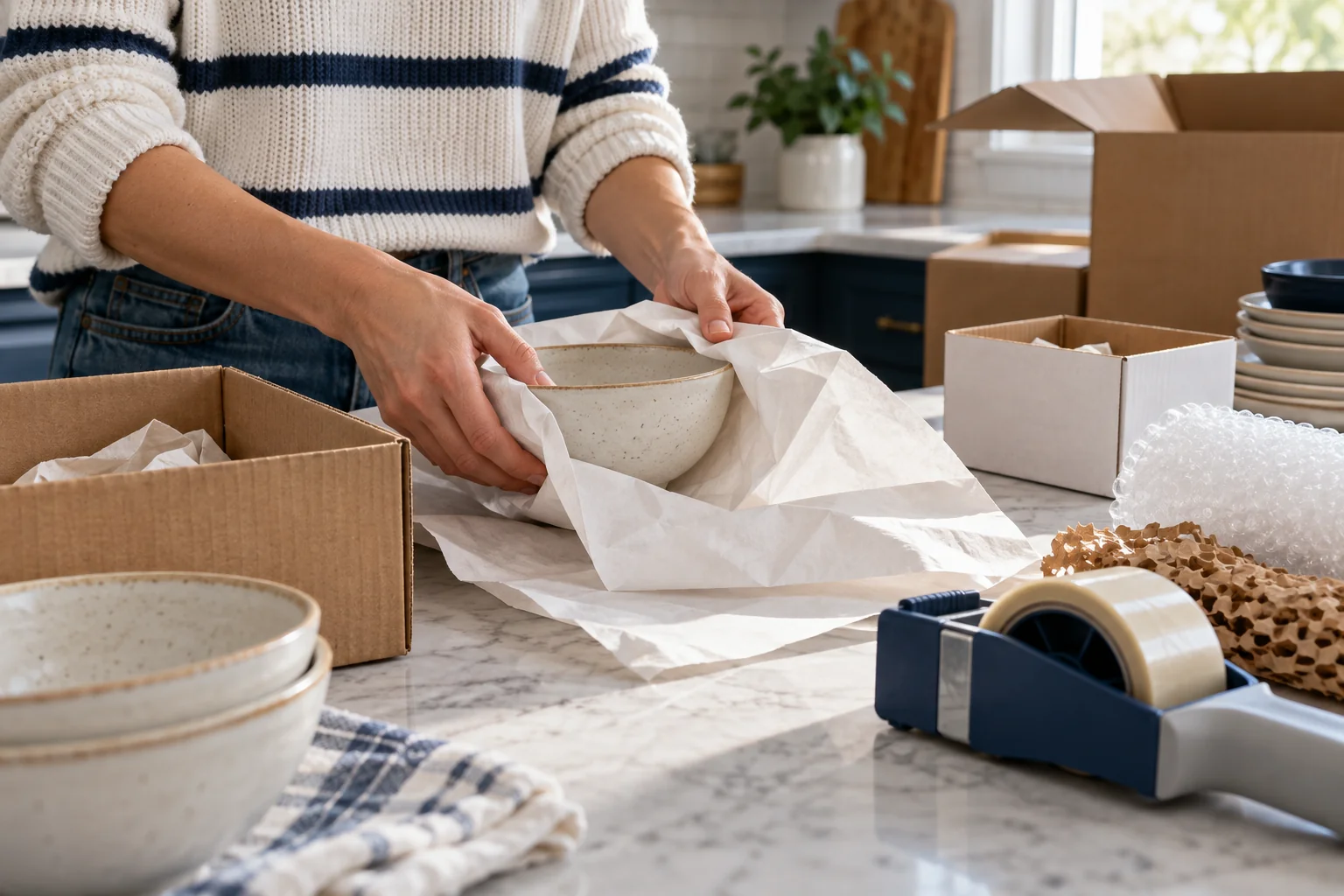
Fragile goods need enough material to separate surfaces, fill gaps, and prevent movement inside the carton. Clean packing paper can protect dishes and glassware; dividers or other fitted protection may help for some items. Use the method recommended by the product maker or packing provider for delicate electronics and unusual objects. Keep cords and small parts labeled with the item they belong to. A tangled bag of anonymous cables is an unpacking problem created during packing.
Estimate paper and other cushioning by testing a sample carton. Pack a few representative plates or glasses, close the carton, and note how much material was used. Multiply cautiously for similar cabinets, then keep a reserve for odd shapes. This approach produces a better order than assuming one roll will cover an entire kitchen. Do not save on cushioning by leaving empty space around fragile pieces.
Tape should be appropriate for the carton and the expected load. Calculate enough for bottoms, tops, and occasional repairs, with a working dispenser that the packers can use comfortably. Buy or borrow an extra dispenser if several people will pack at once. Check the supplier's instructions for closure; a damaged or reused box may need replacement rather than more tape. Keep tape and a marker in each active packing zone so workers do not spend time searching for the only roll.
Labels can be simple and still effective. Give each destination room a short name or code, and put it on more than one side of a carton so it remains visible in a stack. Add a brief description and a priority mark for items needed soon after arrival. If a carton is fragile, mark it, but pack it as if the marking could be missed. The room-code and label guide explains how to make the system survive handling and unloading.
Use one numbering or tracking approach if you need to account for cartons. A simple sequence tied to the room inventory is enough for many households. Photograph high-value or unusually fragile items before packing, and keep the image with the inventory record. Do not write unnecessary sensitive details on the outside of a box. A label should direct handling and placement, not advertise its contents to anyone who sees the truck.
Buy in stages and control the reserve
The first purchase should support the rooms you will pack first and provide a sample of each likely carton size. After packing one or two representative areas, revise the count for the rest of the home. This staged approach avoids a large pile of the wrong box size. It also lets you learn whether a material is awkward to use before buying more. If the move date is close or supply access is limited, order earlier and include a modest reserve for late discoveries.
Track quantities with three numbers: planned, acquired, and used. For example, a household may plan 30 small boxes, acquire 20, and use 12 after packing the books and pantry. The remaining eight are available, and the next purchase can be based on the still-unpacked rooms. Keep the count beside the room inventory so the shopping list changes with the shipment. If a room is emptied through donation, reduce the material estimate before ordering again.
The count also reveals bottlenecks. If three people are packing but only one tape dispenser works, the missing dispenser may matter more than another bundle of boxes. If cartons are ready but there is no clear place to stage them, supplies will obstruct rooms that still need sorting. Assign a dry, accessible staging area and leave paths to doors, electrical panels, and frequently used belongings clear. Do not stack packed cartons so high that labels disappear or the pile becomes unstable. A good material plan includes where materials and finished cartons will sit during the weeks before pickup.
Ask about return policies before buying more than you can use. Some suppliers accept unused boxes in saleable condition; others do not. Keep receipts and note return deadlines. If a mover provides packing materials, ask how it charges for unused material and whether extra cartons can be added on the day. Do not assume a provider will carry unlimited boxes or that every material is included in a flat service price.
Reusable materials can reduce purchases when they protect the contents. Sturdy bins, clean boxes, towels, and blankets may be useful, subject to the mover's packing rules and the items involved. Avoid using textiles that you will need immediately on arrival unless they are easy to locate. The U.S. Environmental Protection Agency's moving and cleaning tips encourage reuse and recycling of packing materials. Check local recycling rules for what is accepted after the move; tape, plastic film, and mixed materials may require separate handling.
Keep the reserve in a known place. A small supply station with spare boxes, paper, tape, markers, labels, scissors, and a rubbish bag prevents repeated trips across the home. If several rooms are being packed at once, give each area enough consumables to work independently. Store sharp tools safely and keep materials away from walkways. The supply plan should make the work smoother, not fill the hallway with unused cartons.
Match the plan to the people doing the packing
If a professional crew is packing, ask what preparation it expects from the household. You may need to separate items that are not moving, identify high-value belongings, arrange access, and keep children or pets away from work areas. Confirm which rooms and items are included, what materials the crew brings, and whether unpacking or debris removal is part of the agreement. Do not prepack a fragile item unless the provider has explained how self-packed items are handled under its terms.
If friends or family are helping, make tasks specific. One person can pack books into small cartons, another can sort clothing, and a household lead can handle documents and fragile items. Give each person the room code, the contents they should leave accessible, and the location for full boxes. A vague instruction to “pack the kitchen” can result in the coffee maker, medicine, or pet food being sealed before it is needed.
If the household is packing over several weeks, choose a sequence. Seasonal and rarely used items can go first. Daily kitchen items, work equipment, bedding, and cleaning supplies stay available longer. A supply order should follow this sequence: special containers may need more lead time, while general cartons can be replenished as counts become clearer. Put deadlines beside rooms that need to be ready before a crew or vehicle arrives.
Check packed cartons before a helper loads them. The bottoms should be sound and closed, tops flat enough to stack safely, and labels visible. A carton that is too heavy or rattles with movement should be repacked. That correction is easier in the room than at the curb beside a waiting truck. Keep a small kit of tape and markers available during loading for last-minute repairs and clarifications.
Work through a household example
Imagine a home with a kitchen, living room, two bedrooms, a home office, and a garage. The household's first guess is 70 boxes of one size. A room walk-through shows why that number is not yet useful: the office has dense books and files, the kitchen has fragile dishes, one bedroom has mostly bedding, and the garage contains tools plus items that will be donated.
The household makes a range by room and contents. It orders a first batch of small cartons for books, medium cartons for kitchen items, and a few large cartons for light bedding. It adds clean paper, tape, markers, and labels. It photographs the mirror and asks the mover whether a fitted carton is required. It holds off on ordering many garage cartons until the donation pile is removed. After the first weekend of packing, it compares the actual cartons used with the rooms still open and adjusts the order.
The moving company will pack the fragile glassware but not the pantry or the office. The household marks those cabinets on the inventory and does not buy professional-grade glassware kits for work already included. It confirms that the company supplies its own material for that service. The household keeps an essential-items bag outside the moving shipment and labels the remaining cartons by destination room.
Suppose the office takes eight small cartons instead of the expected five. The household updates the inventory, checks the reserve, and asks whether the added cartons matter to the mover's shipment estimate. A few boxes may not change the arrangement, but the provider should know when the actual shipment differs from the information used for booking. The supply list and service record remain connected.
Finish the supply cycle after delivery
Unpack with the inventory close by. Confirm that cartons and special items arrived, and follow the mover's process for noting damage or missing pieces. FMCSA's interstate moving checklist advises consumers to inspect the inventory at delivery and note damaged or missing boxes and items before signing documents. The exact documents and rules for a local move may differ. Preserve the relevant packing photographs and receipts if a problem needs to be reported.
Flatten reusable cartons that remain sound and offer them to someone who can use them, or follow the local recycling program. Return unused supplies when the purchase terms allow it. Keep specialty containers for equipment you expect to move again only if they can be stored cleanly and safely. Dispose of damaged or contaminated material appropriately. A room inventory that began as a shopping guide can also tell you when the last box has been checked and the packing job is truly finished.
Buy for the fragile room, then revise
A kitchen with glassware needs a different supply mix from a closet of folded clothes. Count the fragile groups first, identify what must be wrapped, and estimate box sizes that a person can lift when full. Keep a small reserve of tape and labels for last-day items, but avoid buying a large surplus before testing the first few boxes. As packing begins, track which box sizes run out and which remain unused. That observation is more reliable than the household's first guess. Set aside a separate, clearly marked container for immediate-use supplies so the last roll of tape is not sealed inside the shipment.